 World of Business
  World of Digital
  World of Media
  World of Sport
Our Chief of Student Life and Strategy, Gareth Smith, spoke to LBC about the clear benefits of accelerated degrees. Hear Gareth’s thoughts below:
Graduates are leaving university with significant levels of debt and policymakers are wrestling with trying to design a system that is fair for students and tax payers, and that also acknowledges the precarious state of most institutions’ finances. Yet one question is rarely asked: why are 99.8% of all degrees three years long in the first place?
The structure of the UK academic year, typically running from September to May, dates back to the origins of the university sector. Whilst higher education has evolved enormously since then, the basic rhythm of the academic year has largely remained the same, without us asking the simple question – why?
In 2026, is the traditional academic year still in the best interests of students? It certainly can’t be in the interests of universities to have millions of pounds worth of real estate lying largely fallow for months on end across the summer.
Accelerated degrees offer a practical alternative. By delivering teaching across more of the calendar year, students can complete the same degree-level qualification in two years rather than three. The benefits are clear: graduates incur thousands of pounds less debt (as does Rachel Reeves in the Treasury) while entering the workplace a year earlier than their counterparts on traditional three-year courses. Across the savings in fees and maintenance, a typical accelerated student at UA92 is leaving with potential total savings of up to £15,000.
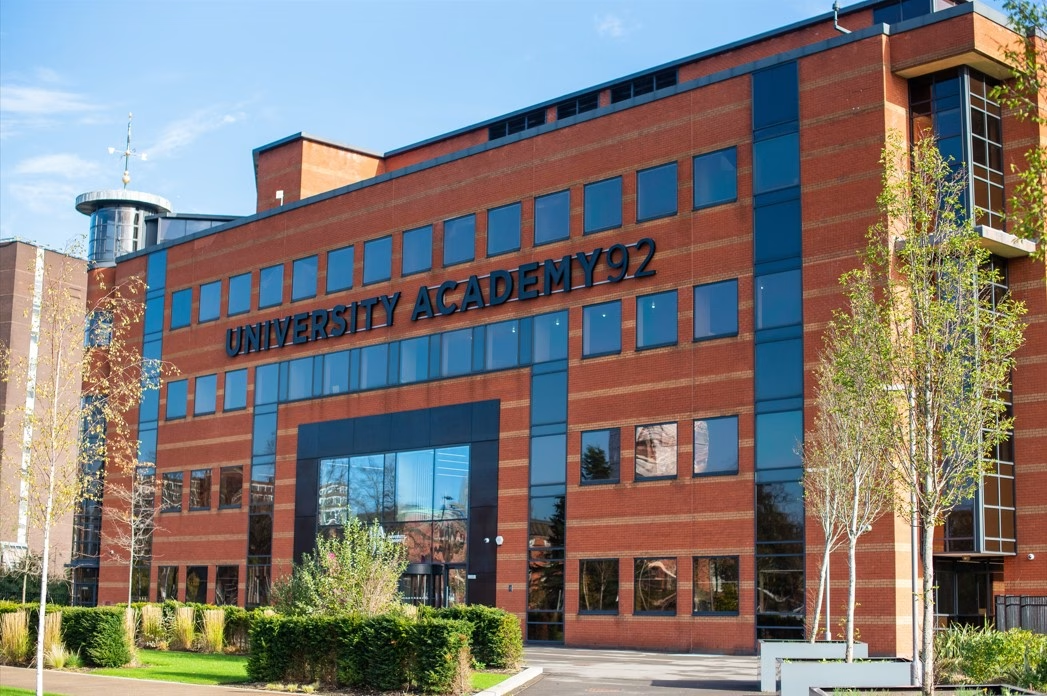
At UA92 our degrees are structured into six-week blocks. Instead of four blocks per year, as delivered on our standard three-year courses, accelerated students study six blocks, equating to 36 weeks of teaching per year which allows them to complete their qualifications in two years while gaining the same knowledge and skills as their peers. We have seen the number of accelerated students at UA92 increase every year since we opened and this academic year over a third of our degree students have enrolled on accelerated programmes. The results are good, with both continuation rates and the proportion of students gaining “Good Honours” higher than those on our traditional three-year courses.
Accelerated degrees will not suit every student or course; but with the introduction of the Lifelong Learning Entitlement starting from 2027, the flexibility for students to study more quickly needs to be prioritised, alongside the option for them to study more slowly.
As the conversation around student finance continues, accelerated degrees show there are different ways to deliver a university education that can help ease the financial burden on both graduates and the government while maintaining academic standards.
Find out more about our Accelerated Degrees here.