OUR COURSES ALL COURSES
  • Open Days
  • How You Study
  • Apply
  • Health, Exercise and Sport
  • World of Digital
  • Sports Journalism
OR EXPLORE BY AREA

UNIVERSITY ACADEMY 92

MANCHESTER

OUR COURSES ALL COURSES
  • Open Days
  • How You Study
  • Apply
  • Health, Exercise and Sport
  • World of Digital
  • Sports Journalism
OR EXPLORE BY AREA
COURSES
PAGES
BLOGS / EVENTS
Software Development

Cyber Security
BSc (Hons)

DIGITAL

Tackle the growing threat of cyber crime and learn how to build resilient systems of the future with a BSc (Hons) Cyber Security degree at UA92.
The Lancaster university logo.

Already have your qualifications?

You can start in September, November, January, February or April. Find out how to apply for any of our entry points.

How to Apply

STUDY OPTIONS

OVERVIEW

STUDY LEVELS

BSc (Hons)

UCAS CODE

G651

DURATION

3 Years

START DATE(S)

Sep / Nov / Jan / Feb / Apr

ENTRY YEAR

2026/27 | 2027/28

ENTRY REQUIREMENTS

104

Male cyber security student at UA92
What you will learn

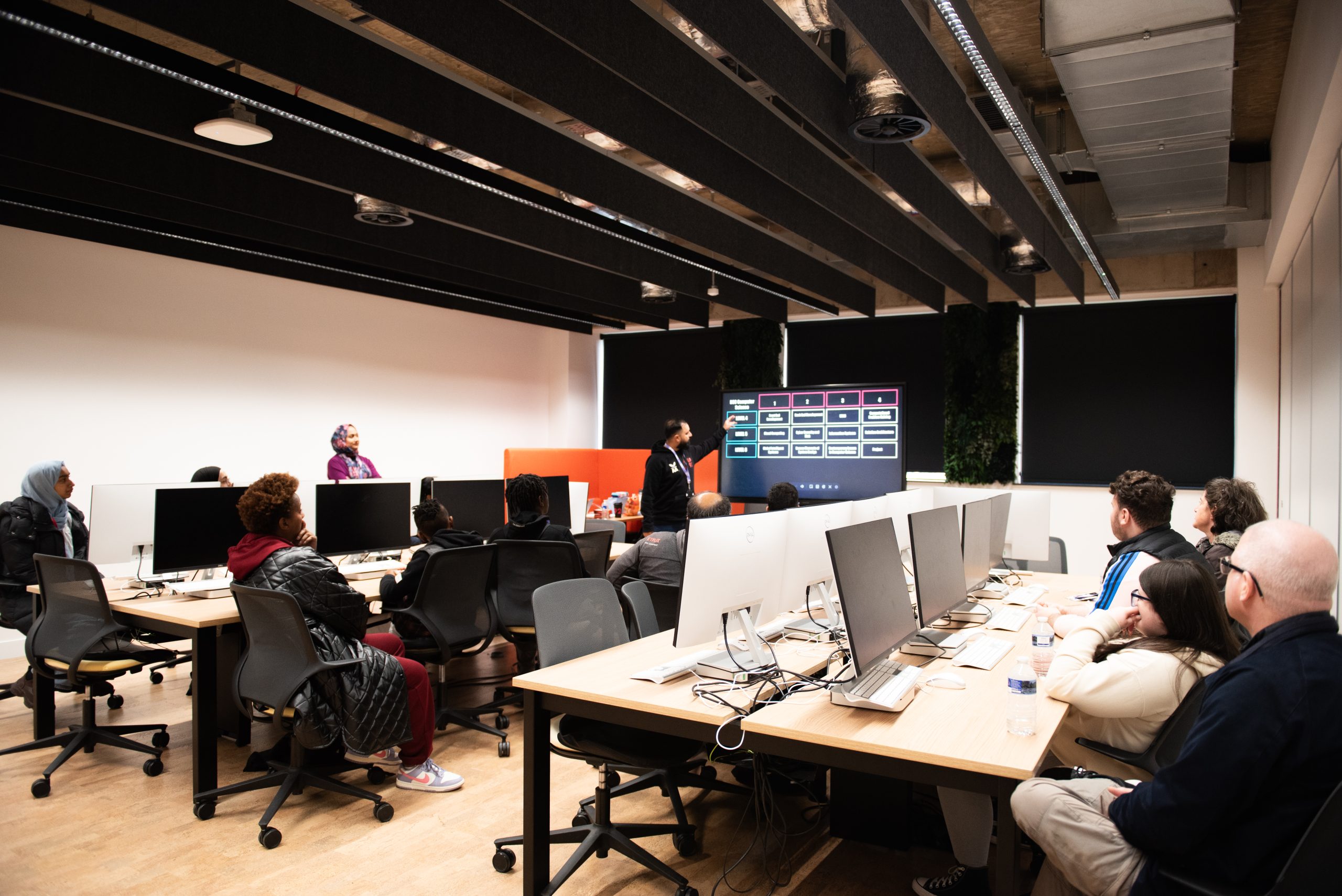
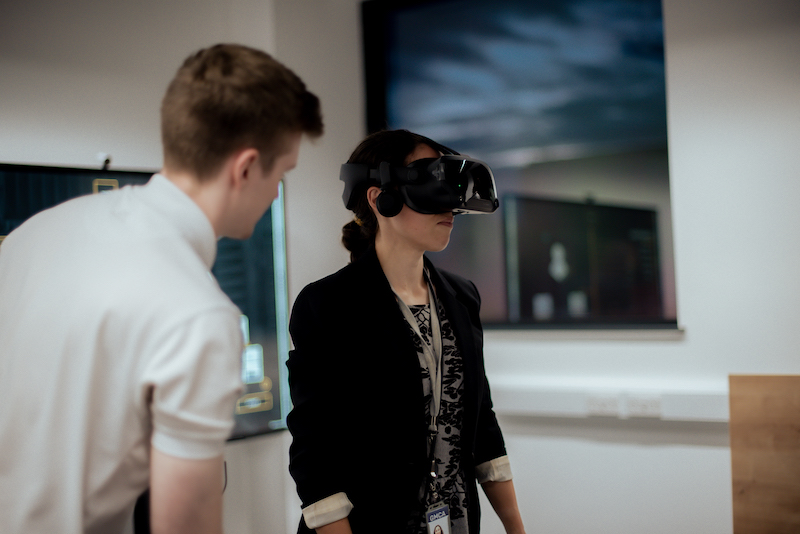
Delivered in our well-equipped Digital Academy, this 3-year Cyber Security degree will teach you secure back-end and front-end development skills. Our industry specialists will train you on languages like Python, JavaScript, and SQL, to ensure your programming skills are on point.

The course is fully hands-on, with access to the latest technology, such as TryHackMe, supporting you to create secure web-based applications and implement cyber security policies and solutions.

You’ll get grips with the world of cyber crime and its impact, understand how to identify and mitigate risk, and become familiar with important ethical and legal issues.

In your third year, you’ll have the opportunity to use your skills and knowledge to devise your own quality solution to a real-world computing security issue.

So, if you’re looking for a cyber security course in Manchester, check out our BSc (Hons) Cyber Security degree and unlock your greatness at UA92.

How You Will Study

Course
breakdown

24 weeks of
study per year


4 x 6-week blocks

1 subject module per block

Subject Module
Breakdown

250 hours of
study per module


80 hrs face-to-face (32%)

20 hrs Digital Wednesdays (8%)

150 hrs independent study (60%)

Assessment
Breakdown

No traditional
end-of-year exams


Year 1 – 100% coursework

Year 2 – 100% coursework

Year 3 – 100% coursework

Your course modules

Module 1 - Front-End Development

You’ll get to grips with HTML, CSS and JavaScript, learning how to design and build a website based using a real-world scenario.

Module 2 - Back-End Development

You’ll take an in depth look at web servers, that form the backbone of the Internet. You’ll gain an understanding of Linux system management, PHP programming language, Structured Query Language (SQL) and database development theory; whilst building a secure database-based webserver app.

Module 3 - Software Design and Development

You’ll look at how secure software systems are developed from inception to delivery and testing. You’ll learn about both traditional software development lifecycle and agile methodologies.

Module 4 - Fundamentals of Cyber Security

This module covers the nature of cyber-crime threat actors and hazards and the importance of Cyber Threat Intelligence (CTI).

Module 1 - Operating Systems

Covers understanding OS capabilities, vulnerabilities and differences. Factors such a performance monitoring, process, resources and memory managed are taught so that given real life scenarios, the most suitable OSs are selected with technical justification.

Module 2 - Cyber Security and Risk Management

You’ll learn how to identify and mitigate risks and how to build systems that are resilient and robust to threat, using the latest cyber security techniques. You’ll focus on the management of SQL injection attacks and how to mitigate Denial of Service attacks.

Module 3 - Databases

You’ll study advanced SQL programming, gaining an in-depth knowledge about database technologies used to implement secure information systems. You’ll also look at the formal processes for documenting system requirements that are used to generate code.

Module 4 - Secure Coding

How write robust, secure code by adopting best practise as specified by bodies such as CyBOK and OWASP is covered, together with practices to mitigate interfacing to other system.

Module 1 - Network Security

You’ll evaluate the risks posed to networks and how to mitigate them using standards and policies. You’ll implement various methods of securing networks through finding vulnerabilities via ethical hacking and penetration testing.

Module 2 - User Experience Design

You’ll get a solid grounding in user interface principles; discover why developing a system that follows good user design principles is essential for any computing system, public facing website, or internal corporate system.

Module 3 - Contemporary Issues in Computer Science

You’ll take a look at some of the most contemporary issues within Computer Science, such as AI, remote working, automation and automated transport; understanding how ethical and legal issues can impact on the process of information systems development.

Module 4 - Final Project

You’ll undertake a large-scale cyber security project based on an actual computing brief. You’ll draw on your knowledge and skills to deliver a comprehensive, quality solution to a real-world security-based computing problem.

What is the 92 Programme?

It’s more than a degree, it’s preparation for life.

Alongside your course modules, you will engage with the 92 Programme, which is built into every degree and tailored to each subject area.

Engaging with the 92 Programme is a requirement for all students and will count towards your overall grade.

Through taught sessions, immersive experiences and coaching, you will build confidence, resilience, wellness, self-reflection and professionalism, skills designed to support your future success.

Find out more about how we prepare students for future career success.

Why the 92 Programme is part of your course?

In a recent study*, 78% of employers believe graduates do not arrive in the workplace fully equipped with the skills they need to be work-ready.

Another study conducted by the World Economic Forum** identified ‘10 Skills You Need for the Future of Work’. These skills include:

  • Emotional intelligence (EQ)
  • Analytical (critical) thinking
  • Active learning with a growth mindset
  • Interpersonal communication skills
  • Leadership skills
  • Technology skills

At UA92, we prepare you for life after graduation and equip you with the skills employers value most. You may not realise it, but developing  these skills now, will get you set for career success and could land you that dream job in the future.

*CMI Report: Work Ready Graduates

**World Economic Forum: The Future of Jobs Report 2023

How is the 92 Programme assessed?

Assessment takes the form of a Professional Diary, which is a log capturing evidence of your learning, activities and reflections. This can be videos, photos or even audio.

This is supplemented with a reflective account, which links your experiences to your personal growth.

92.2%

said they felt supported with their learning.

NSS Results 2026

UA92 scored higher than all Greater Manchester universities for Academic Support in the National Student Survey 2026.*


*compares UA92’s results against the 4 Universities in Greater Manchester: Manchester Metropolitan University, University of Salford, The University of Greater Manchester and The University of Manchester.

THIS COURSE IS TAUGHT AT

UA92 Campus, Old Trafford Manchester

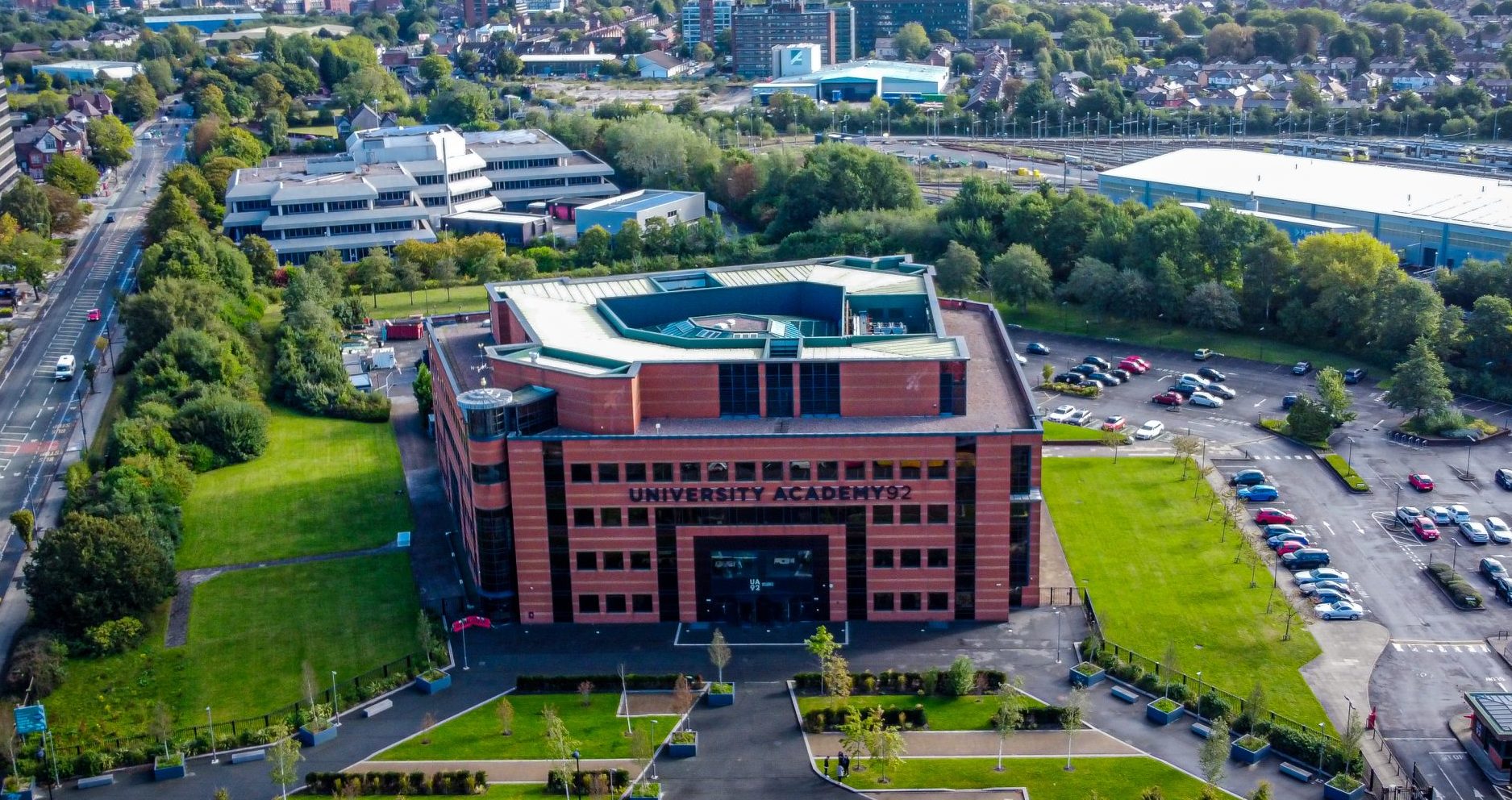
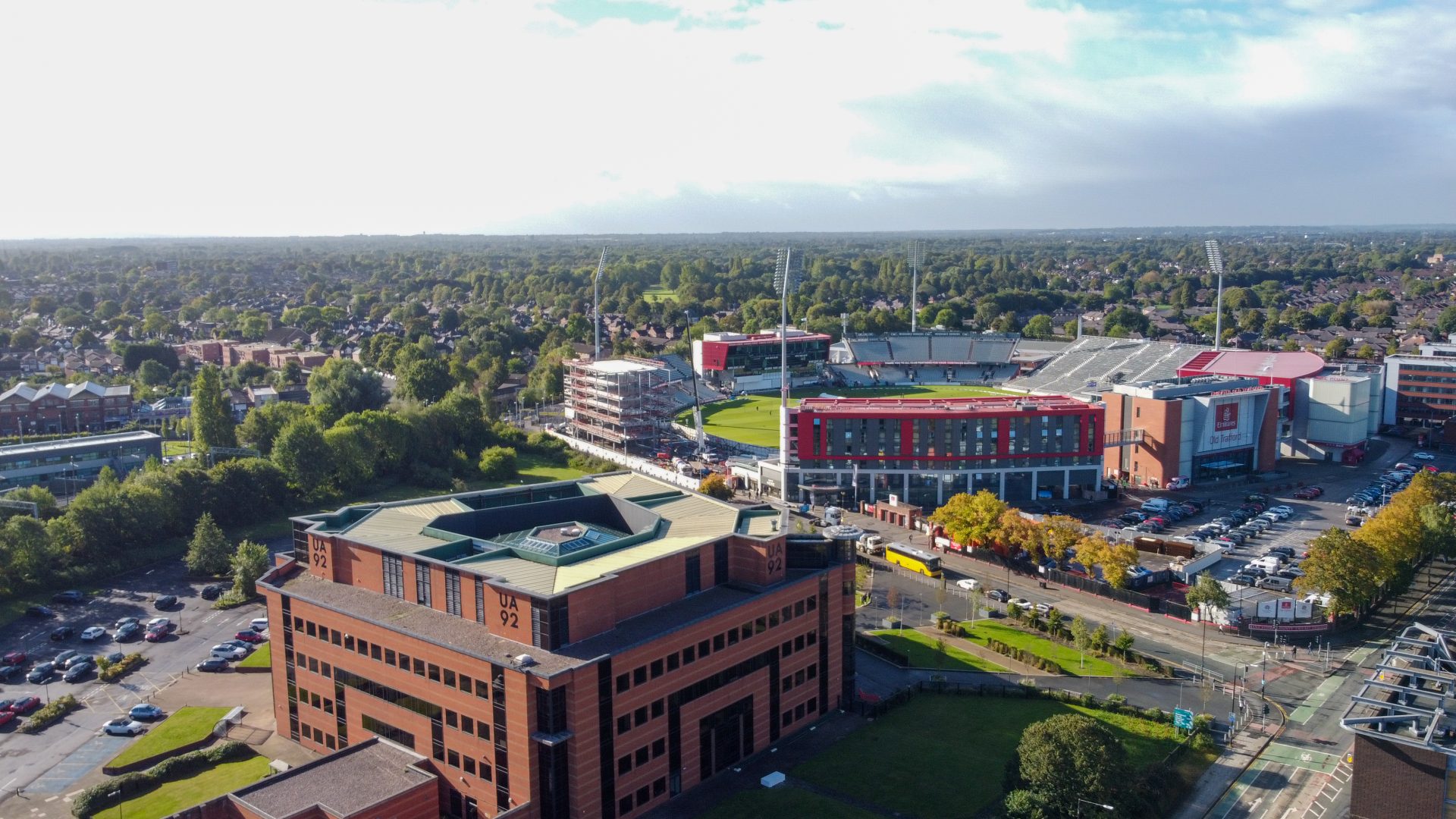
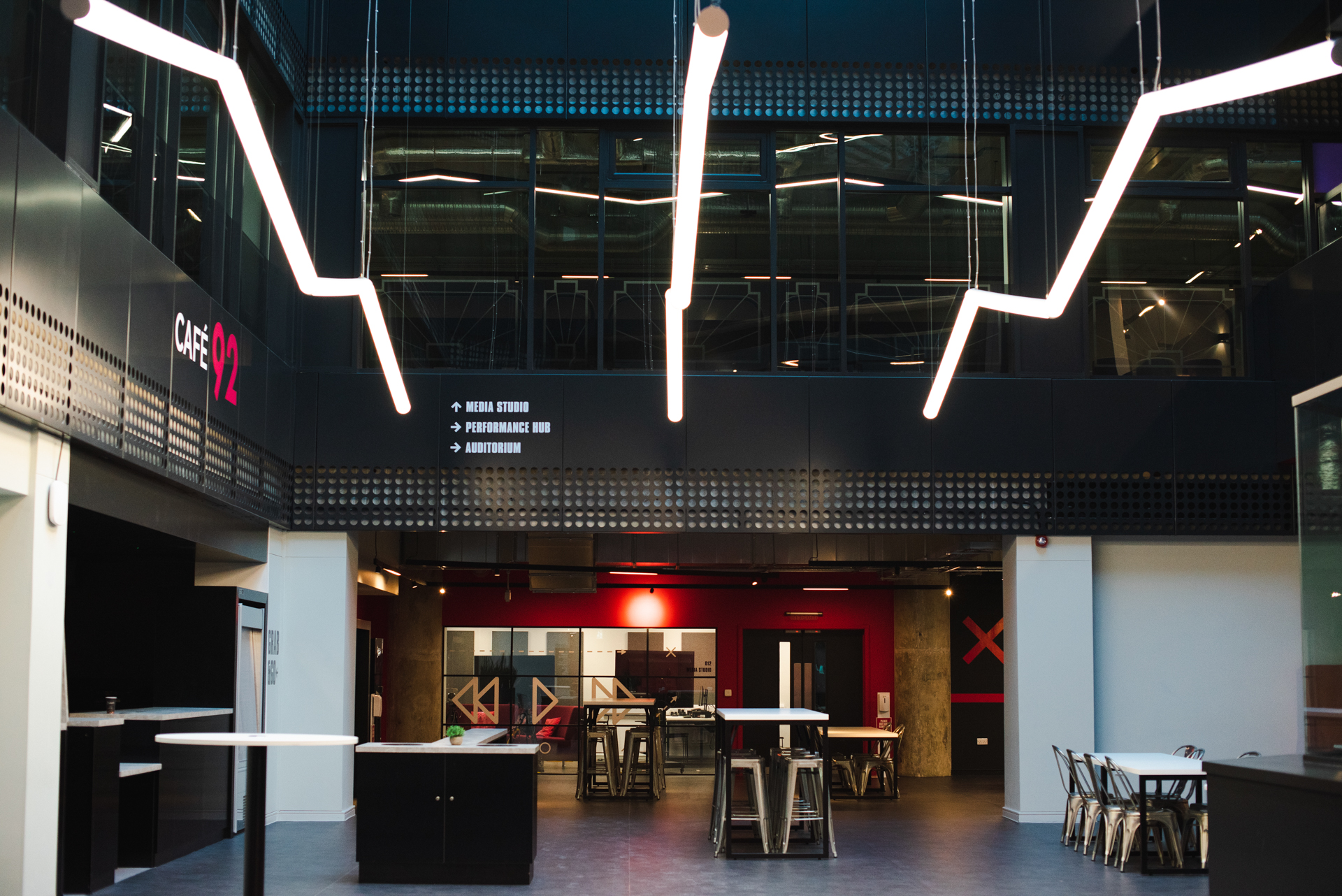
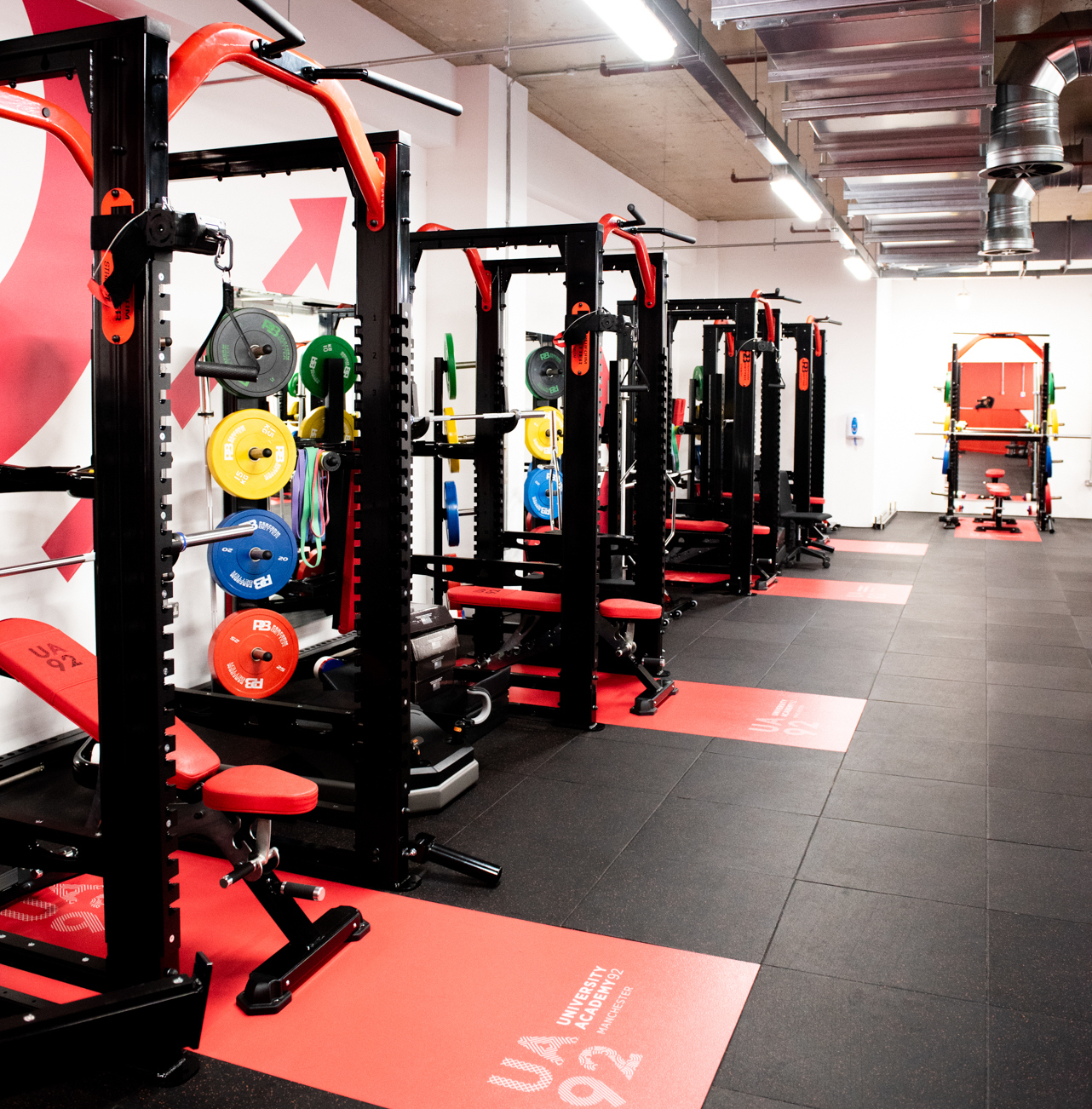
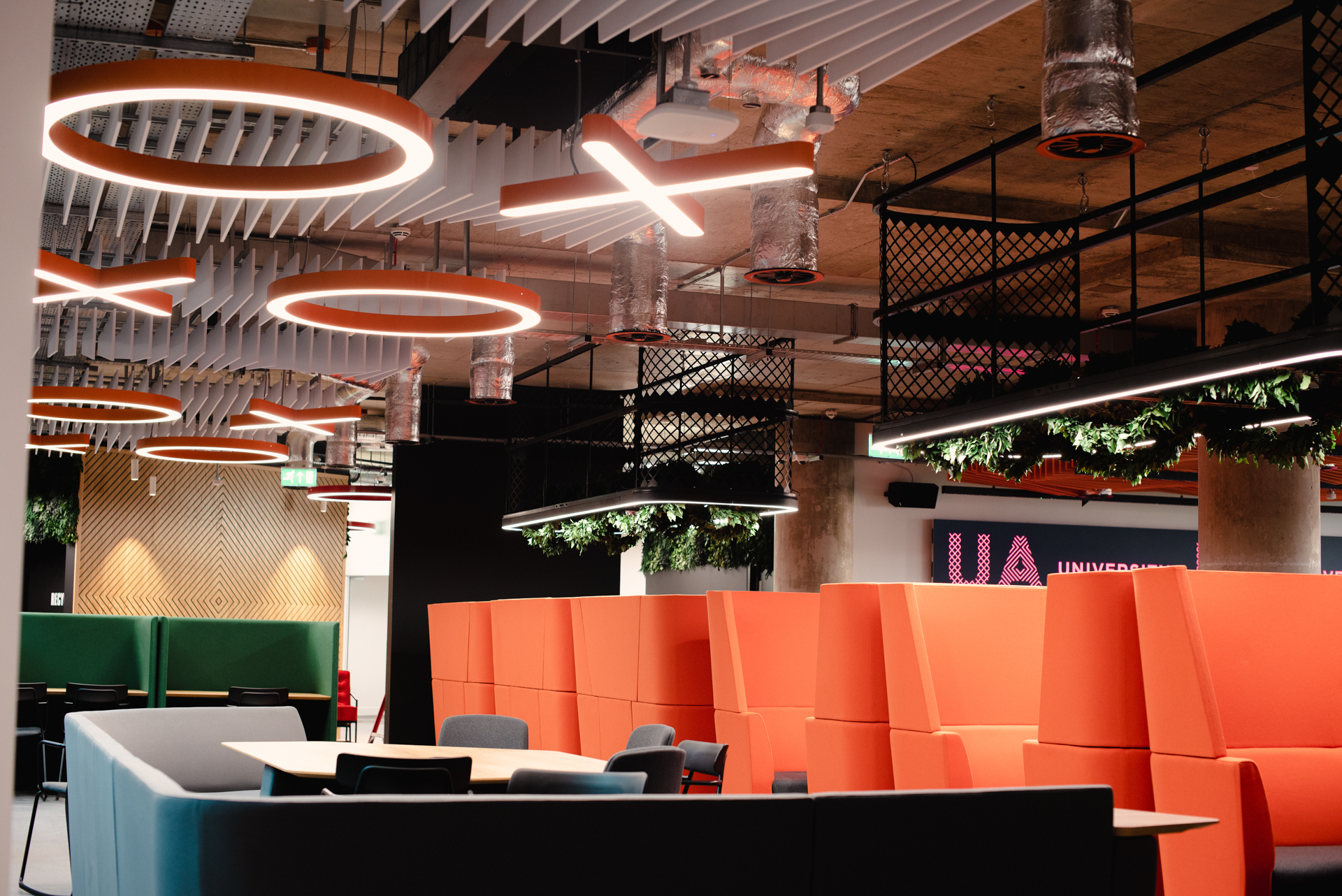
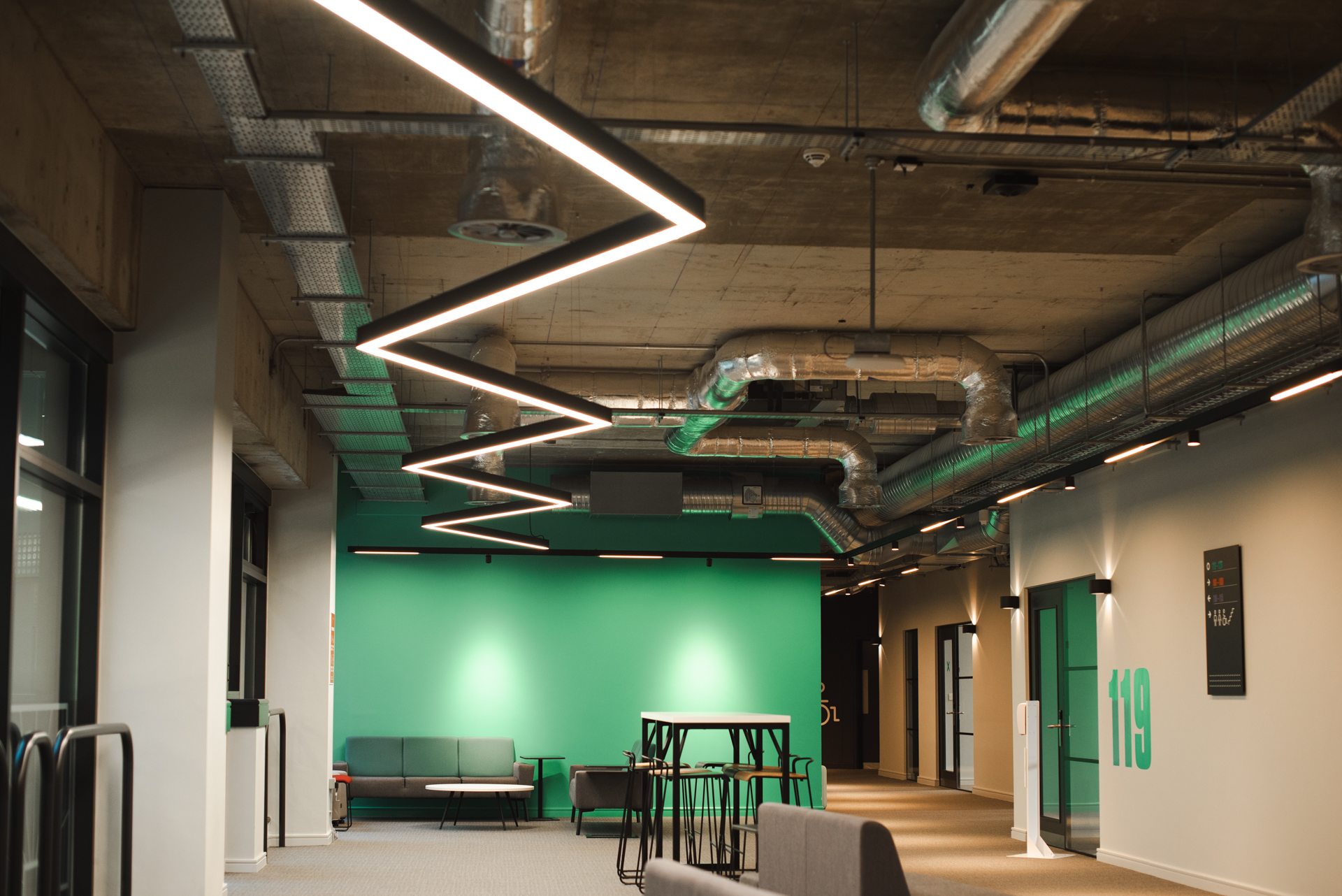
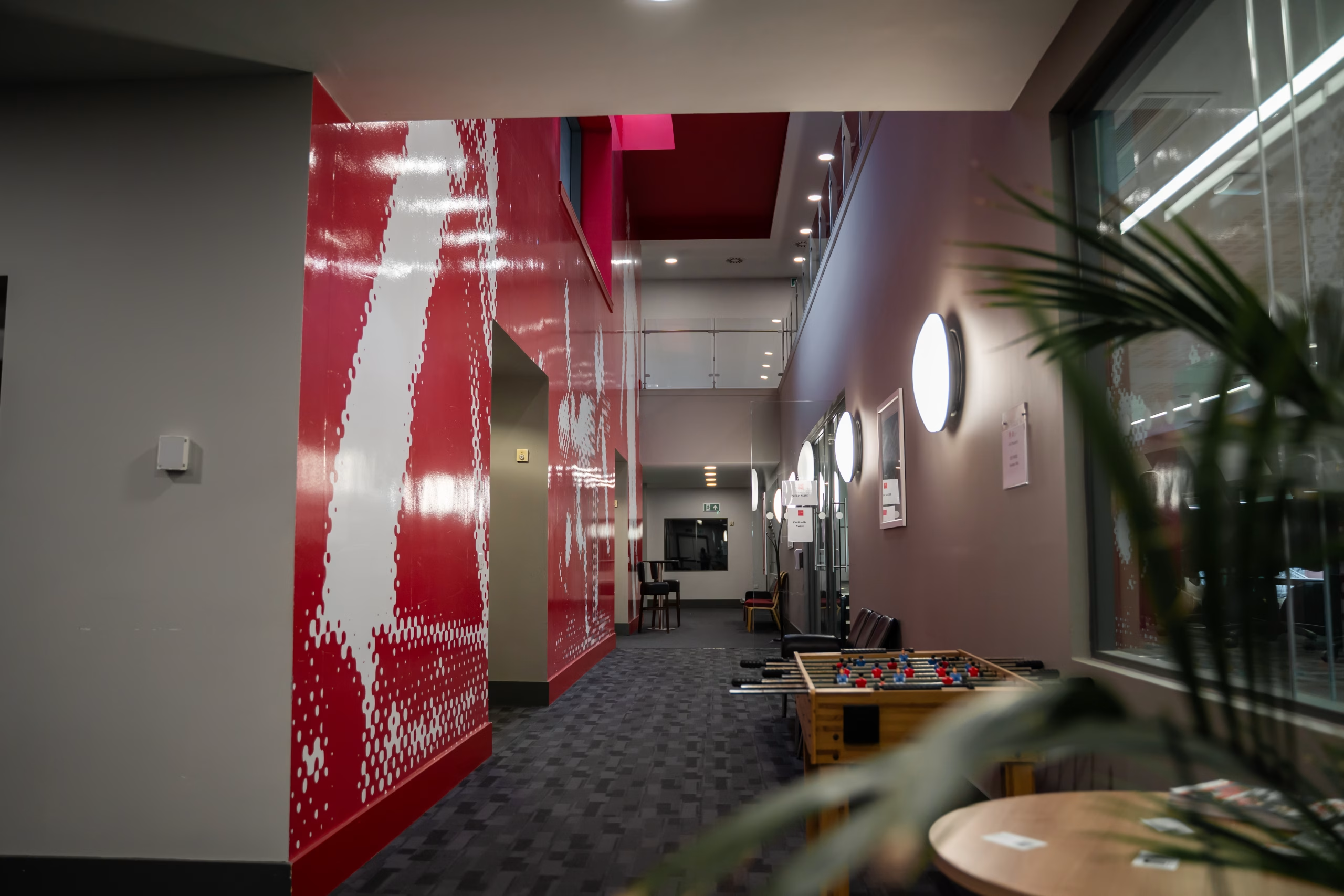
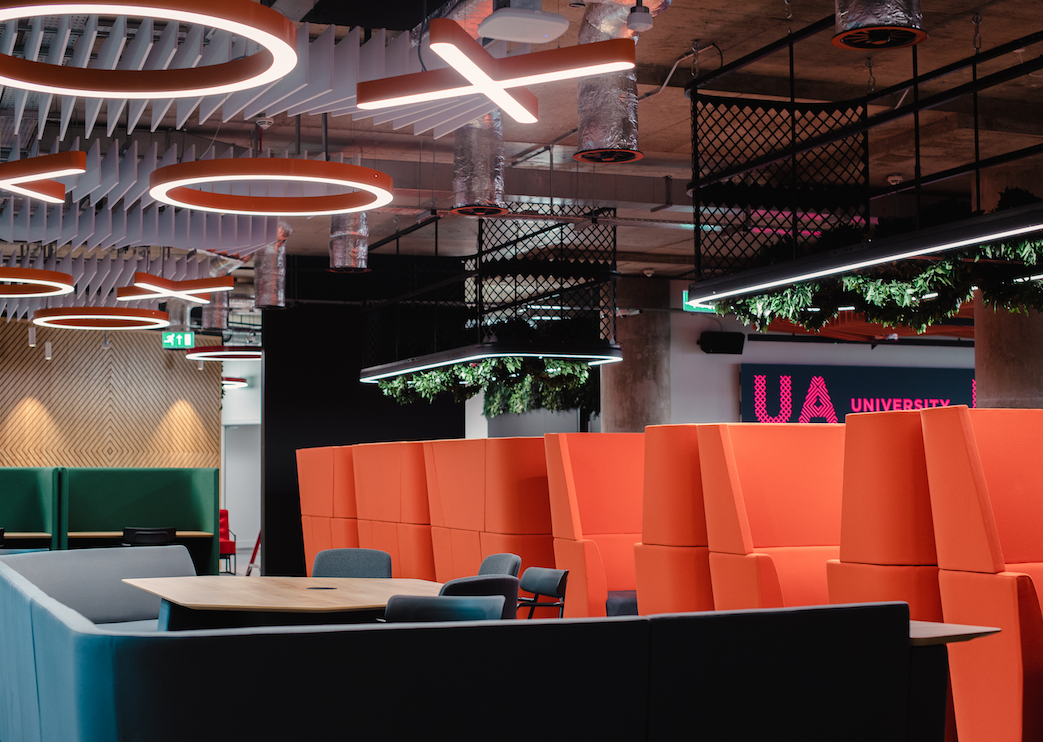
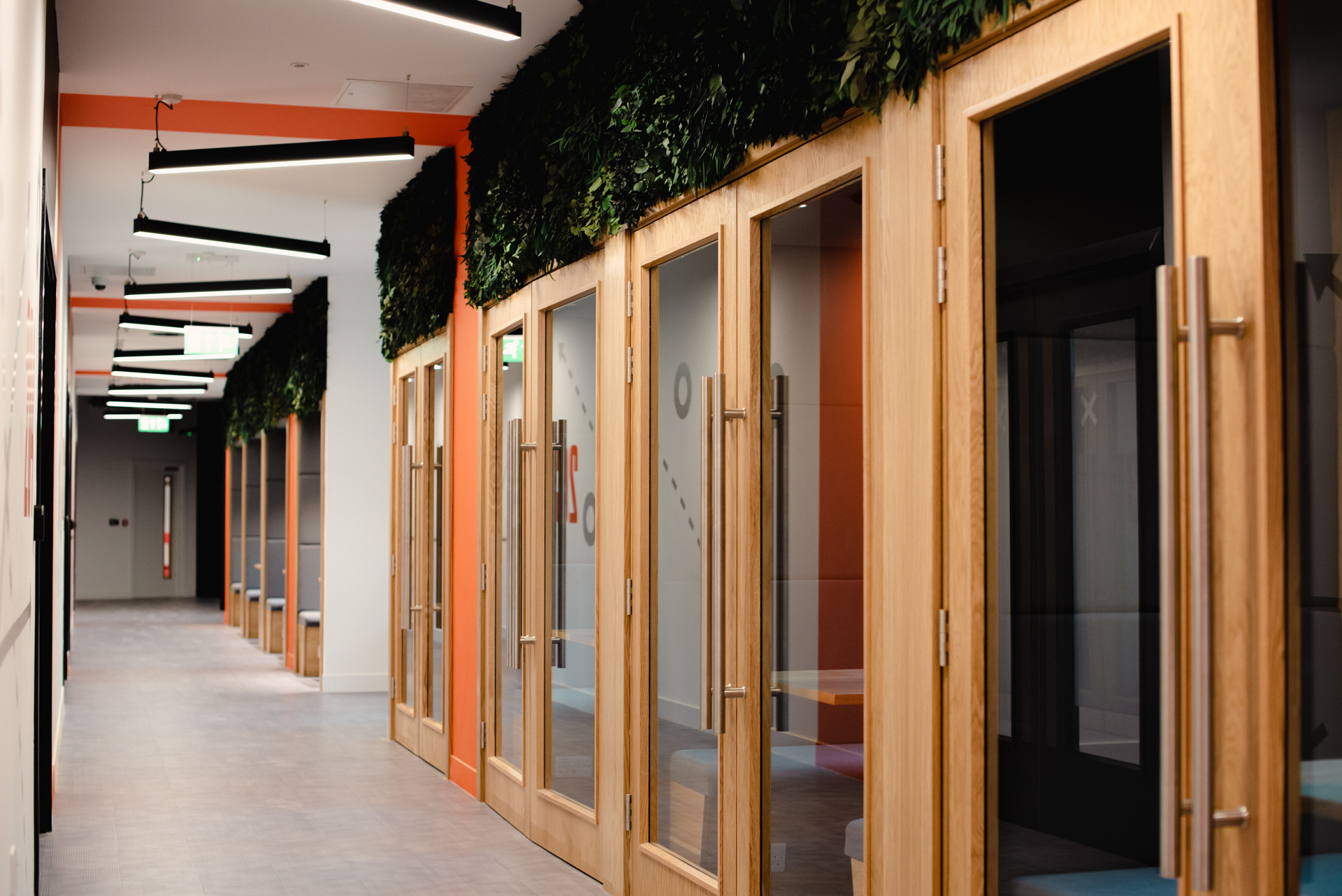
The UA92 Campus in Old Trafford Manchester has teaching facilities across our Main Campus building, Old Trafford Stadium (home of Manchester United Football Club) and Emirates Old Trafford Cricket Ground (home of Lancashire Cricket). All sites are within walking distance of each other and easily accessible by public transport. Inside our Main Campus building there’s a fully equipped Sports Performance Centre, Media Studio and Digital Academy as well as a gym, grab-and-go cafe and social spaces.

My UA92 Journey: Computer Science

What’s next for a Cyber Security graduate?

As the digital world expands, the threat of cyber-crime is growing fast, and becoming more serious. It has the potential to bring down systems that are critical to our way of life and our national security.

This ever-increasing threat means we need more experts in cyber security to keep us and our data safe in a changing world. Cyber security professionals are in demand, and this demand is set to grow significantly as more systems digitise.

You’ll have the tools to succeed in various roles, including network and security engineer, cyber security analyst, information security specialist or data privacy engineer.

The focus on employability throughout this course will set you up for cyber security roles across a huge range of sectors including government, health, education, infrastructure and finance.

91%

of graduates are engaged in employment or further study within 15 months of graduation.*

FIND OUT MORE

UA92 is above the national average for graduate outcomes. The Graduate Outcomes survey is the biggest annual survey that captures the status of recent graduates who completed their studies at a higher education institution in the UK. 

*Graduate Outcomes Survey Results released in 2025. National Average is 88%.

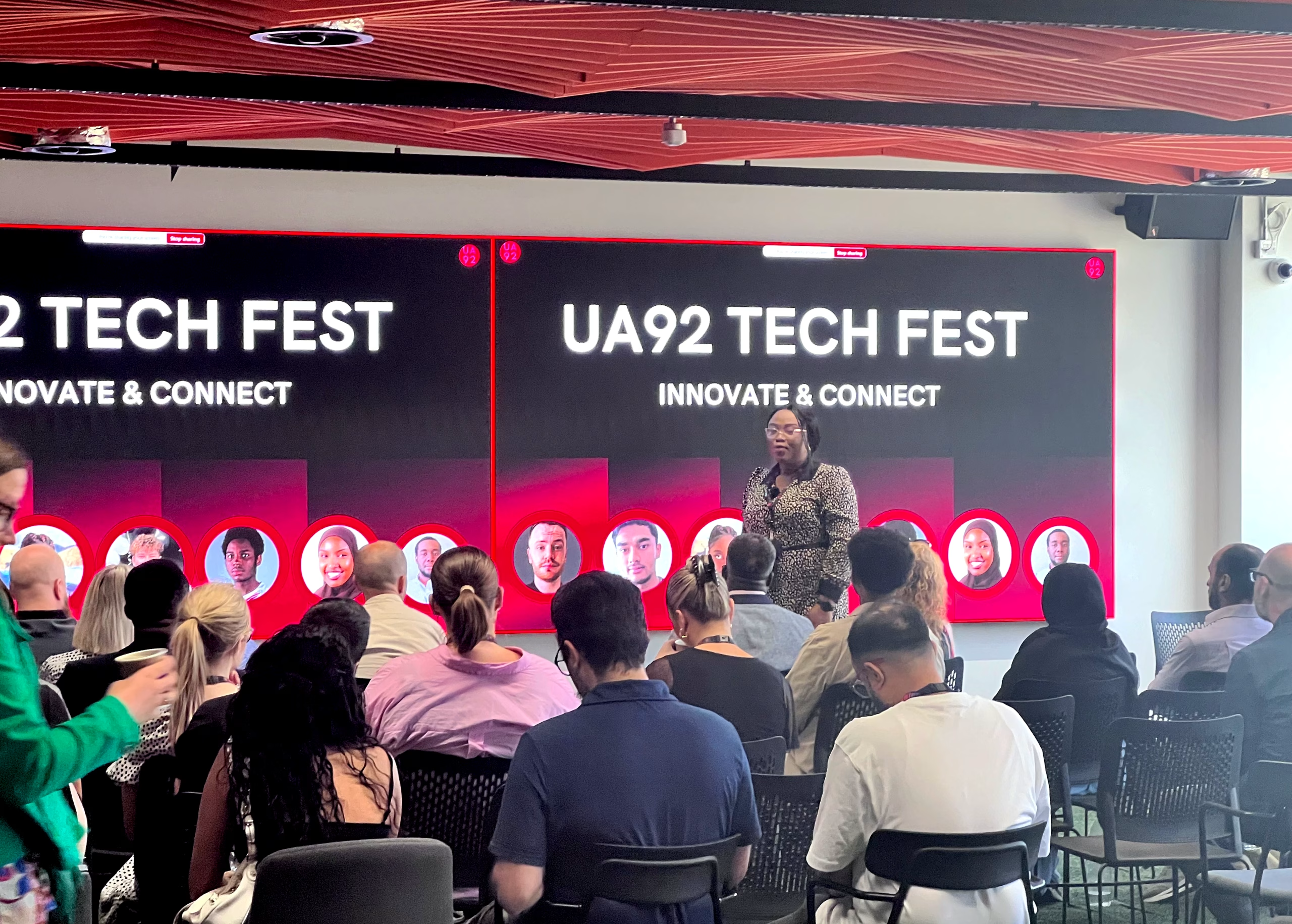
TechFest 2025

INDUSTRY PARTNERS

We have over 100 industry connections who support our mission to develop career-ready graduates. These partnerships provide you with access to industry-leading expertise, mentorship opportunities and work-place experiences.

Our industry partners play a vital role in shaping both the curriculum you study and your student experience. From delivering guest lectures and masterclasses to providing internships and graduate roles.

Find out more

Where are they now?

Where are they now?

abigail at the teaching awards

Abigail

BSc (Hons) Computer Science

Abigail studied Computer Science at UA92, graduating in 2025 and going on to secure a role at the Bank of New York as an Engineering Analyst.

“I’ve always enjoyed problem-solving and learning new things, which led me to pursue higher education and a professional career where collaboration, communication, and adaptability are key. My time at UA92 helped me build confidence, develop strong interpersonal skills through being a student representative, and prepare for life beyond education. I’m the first in my family to go into higher education, and I’m passionate about encouraging others to believe in their potential and take up space in any field they’re interested in.”

 

Aman

BSc (Hons) Computer Science

Aman graduated from UA92 in 2025 with a degree in Computer Science.

“My journey at UA92 played a key role in shaping both my technical skills and personal growth. Studying Computer Science in such a hands-on and supportive environment. It really helped me to build confidence and a strong understanding of real-world problem solving.

After graduating, I went on to complete a project-based internship as a Data Analyst, where I was able to apply the skills and mindset I developed at UA92 in a professional setting. My experience at UA92 prepared me well for the world of work and continues to influence my career path.”

Katie

BSc (Hons) Computer Science

Katie studied Computer Science at UA92, graduating in 2025. She now works as a Technology Consulting Graduate at KPMG.

“UA92 allowed me to explore new things and not only develop my professional skills but personally too.

During my studies, the 92 programme and constant support helped improve my confidence and push outside my comfort zone. New experiences included becoming social media and comms officer for women’s football and becoming a qualified referee through the help of Sport92 and becoming the GetUActive Coordinator.

Professionally, opportunities such as Microsoft hackathons, presenting my final project in the auditorium and guest lectures and insight days from the within the industry itself benefitted me so much and still does in my role as a Technology Consultant with one of UA92’s partners KPMG.”

Matt - Alumni

Matt

BSc (Hons) Computer Science

Matt is now an Analyst at 3vrm, helping organisations to manage risk through their 3rd party supply chain and vendor relationships. 

“I was told at a young  age that I wasn’t “academic”, I dropped out of college due to lack of interest, and then made a living talking. I left a job I was pretty good at to go and do something completely different and study Computer Science at UA92. Computer science was something I wanted to do, and maybe equally as important, I wanted to PROVE that I could do. I did alright on that final point in the end!?”

Teaching Excellence Framework Silver Award

FIND OUT MORE

A TEF Silver award is a recognition that a university or college provides high-quality teaching, learning, and outcomes for its students. It’s given by the Teaching Excellence Framework (TEF), a national scheme that assesses undergraduate courses in the UK. 

ASK OUR DIGITAL STUDENTS

Our friendly ambassadors are ready to answer your questions. Click on the ‘Ask me a question’ button to start a conversation.

ENTRY REQUIREMENTS

The standard entry requirements for the BSc (Hons) Cyber Security degree course is 104 UCAS points. However, each application is assessed on an individual basis, taking into consideration a wide range of factors. Depending on your personal circumstances, and in line with our  Contextual Admissions Policy, your application may still be considered if you have less than 104 UCAS Points. Alternatively, we have other courses that we can offer. If you would like to know more about applying to UA92 or have any questions about our entry requirements, please contact our Student Futures Team.

LEVEL 2

  • 5 GCSEs at Grade C/4 or above including English Language and Maths
  • Accepted Alternatives: Functional Skills Level 2 (English and Maths)

LEVEL 3

  • UCAS Points: 104
  • A Levels: BCC (104 equivalent)
  • BTEC National Extended Diploma: DMM
  • BTEC Diploma: D*D
  • T Levels: M
  • Scottish Advanced Highers: AB
  • IB: 28 points with 14 from Higher Level Subjects

NON-TRADITONAL

Some qualifications do not carry UCAS Tariff points but may still be considered. We take into account a range of qualifications and work/life experience that can demonstrate your ability to succeed on the course. Each application is assessed on an individual basis, taking into consideration a wide range of factors.

Find out about our free one week course that can help you boost your confidence and prepare you to return to higher education.

INTERNATIONAL

International Baccalaureat 

Pass the IB Diploma with minimum 28 points overall, with 14 points from Higher Level Subjects.

English Language Requirements

In addition to meeting the academic criteria, if your first language isn’t English, you may be asked for a recognised English language qualification. This is especially important if you are not a national of a majority English speaking country or you haven’t completed a degree in English. If you are an international student, in order to obtain a student visa, you will be required to demonstrate that you have the correct level of English language competency to study in the UK.

  • IELTS: Overall score of 6.5, with no section lower than 5.5
FEES AND FINANCE
Students studying on the Accelerated Accounting and Business Management course.

WHAT ARE YOU WAITING FOR?


APPLY NOW VIEW OUR PROSPECTUS BOOK AN OPEN DAY

SIMILAR COURSES

VIEW ALL

BOOK A PLACE AT THIS EVENT