 World of Business
  World of Digital
  World of Media
  World of Sport
What does a Football Coach do?
A football coach works closely to build the team. From session planning and individual player development to matchday preparation and post-match review, a football coach helps shape how players and teams learn, play and improve. Whether working in a school, community club, academy or professional environment, coaches influence the standards, behaviours and playing identity that help players develop, compete and enjoy the game. It is one of football’s most influential and varied careers.
What is a Football Coach?
A football coach helps players and teams learn, develop and perform. In UK football, the role can look different depending on the setting, whether that’s coaching grassroots, academy or senior.
Coaching is more than delivering drills. Coaches plan sessions, build relationships, observe and analyse players, provide feedback, support welfare, and create environments where people can improve and stay involved in the game. They often work as part of a wider team, drawing on coaching, education, safeguarding, analysis, sport science, medical and community support.
Some coaches are generalists, leading a team or age-group programme. Others specialise in areas such as goalkeeping, individual development, set pieces, attacking or defending, or a specific academy phase. Across all settings, the coach’s role is to connect football knowledge with the needs of the players, the team and the environment they work in.
Who do Football Coaches work for?
Football coaches work across every level of the game, from grassroots and community settings through to academy, semi-professional, professional and international environments. In the UK, coaching roles may be paid, voluntary, part-time, sessional, full-time or self-employed, depending on the setting and level of responsibility.
Coaches may choose to work at professional and semi-professional clubs, with men’s and women’s clubs across first-team, reserve, development squad and specialist coaching roles. Alternatively, clubs will have academies and development programmes where coaches can support young players across structured talent pathways, including the EPPP’s Foundation, Youth Development and Professional Development phases.
Many coaches work at grassroots clubs and leagues or within the community, whether thats at schools, colleges and education providers, or club community organisations and foundations, delivering football, education, health, inclusion, employability and social impact programmes through the community arm of professional clubs.
Local authorities, leisure trusts and community sport organisations also employ coaches, as well as national governing bodies and football development organisations, such as The FA or County FAs.
You can set up your own coaching business, deliver private 1-to-1 sessions, group sessions, holiday camps and online coaching programmes.
In practice, many football coaches build portfolio careers across several of these settings. A coach may work in a school during the day, coach in academy football in the evenings and weekends, and run private individual or small-group sessions during the off-season.
If you’re more interested in the science of performance, take a look at our sports scientist career guide. If nutrition is where your focus lies, our sports nutritionist guide covers that in detail.

What Does a Football Coach Do Day-to-Day?
The day-to-day work depends on the level you operate at and the age group you coach. A typical role might involve:
- Planning and delivering training sessions – designing technical, tactical and physical sessions that develop the team and individual players.
- Analysing matches and opposition – reviewing performance footage, scouting opponents and using analysis to inform training and tactics.
- Managing the squad – balancing selection, rotation and minutes across the season.
- Working with individual players – delivering one-to-one coaching, development plans and feedback to support each player’s progress.
- Coordinating with the wider performance team – working alongside sports scientists, analysts, medical staff and nutritionists to align coaching and performance.
- Communicating with players and staff – delivering team talks, half-time interventions, post-match debriefs and ongoing player feedback.
- Engaging communities and partners – delivering football activity in clubs, schools and community settings and building positive relationships with parents, carers, teachers, volunteers and local organisations.
- Continuing your own development – earning and renewing coaching qualifications, attending CPD and learning from peers across the game.

What Types of Football Coaching Work Are There?
Football coaching covers several distinct specialisms. Here’s where coaches typically focus:
- Performance Coach – working with senior professional teams, focused on tactical preparation, match-day management and player performance.
- Development Coach – developing young players across foundation, youth development and professional development phases, with a focus on long-term player development.
- Specialist coaching – focusing on a specific area of the game such as goalkeeping, set pieces, individual development, attacking play or defensive structure.
- Women’s and girls’ coaching – working across the rapidly growing women’s game, from grassroots and academy through to Women’s Super League and international level.
- Grassroots and community coaching – working with players in community clubs, schools and FA-affiliated programmes, often the first coaching environment most players experience.
What is the career path for a Football Coach?
Your career path as a football coach typically starts in grassroots, community or academy coaching. Many coaches begin as volunteers or part-time coaches at community clubs or schools, while completing their coaching qualifications. From there, you can progress into paid academy roles, specialist coaching positions and senior coaching roles at professional clubs.
The coaching qualification ladder is central to your progression. FA Level 1 and Level 2 are the entry points, followed by the UEFA C, B, A and Pro licences. The UEFA Pro licence is required to manage a Premier League club. Many coaches choose to specialise in a particular age group or area of the game as they progress. Others move into coach education, technical directorship or management.

What Skills Does a Football Coach Need?
- Coaching qualifications
- Session planning and curriculum design
- Match and opposition analysis
- Knowledge of the laws of the game, FA regulations and safeguarding
- Deep knowledge of football culture, history and tactical evolution
- Clear communication and the ability to deliver instructions under pressure
- Leadership and the ability to set a culture across a squad
- Player development and understanding how to bring the best out of different personalities
- Resilience and the ability to manage the pressure of results
- Decision-making in fast-moving match situations
- Continuous learning and adaptability across formats, age groups and the game’s evolution

How Do You Become a Football Coach in the UK?
There is no single route into football coaching, but most professional coaches combine playing experience, formal qualifications and on-the-job coaching practice. The FA coaching qualification ladder is the foundation in England, and most professional clubs and academies require at least UEFA B for entry-level professional coaching roles.
A degree in sports coaching gives you the academic and practical foundation to accelerate your progression. You study the science of player development, the principles of coaching pedagogy, the laws of the game and the regulatory frameworks that govern professional football. The BSc (Hons) Sports Coaching at UA92 combines this academic foundation with placement opportunities at clubs across Greater Manchester.
Where can you study Sports Coaching?
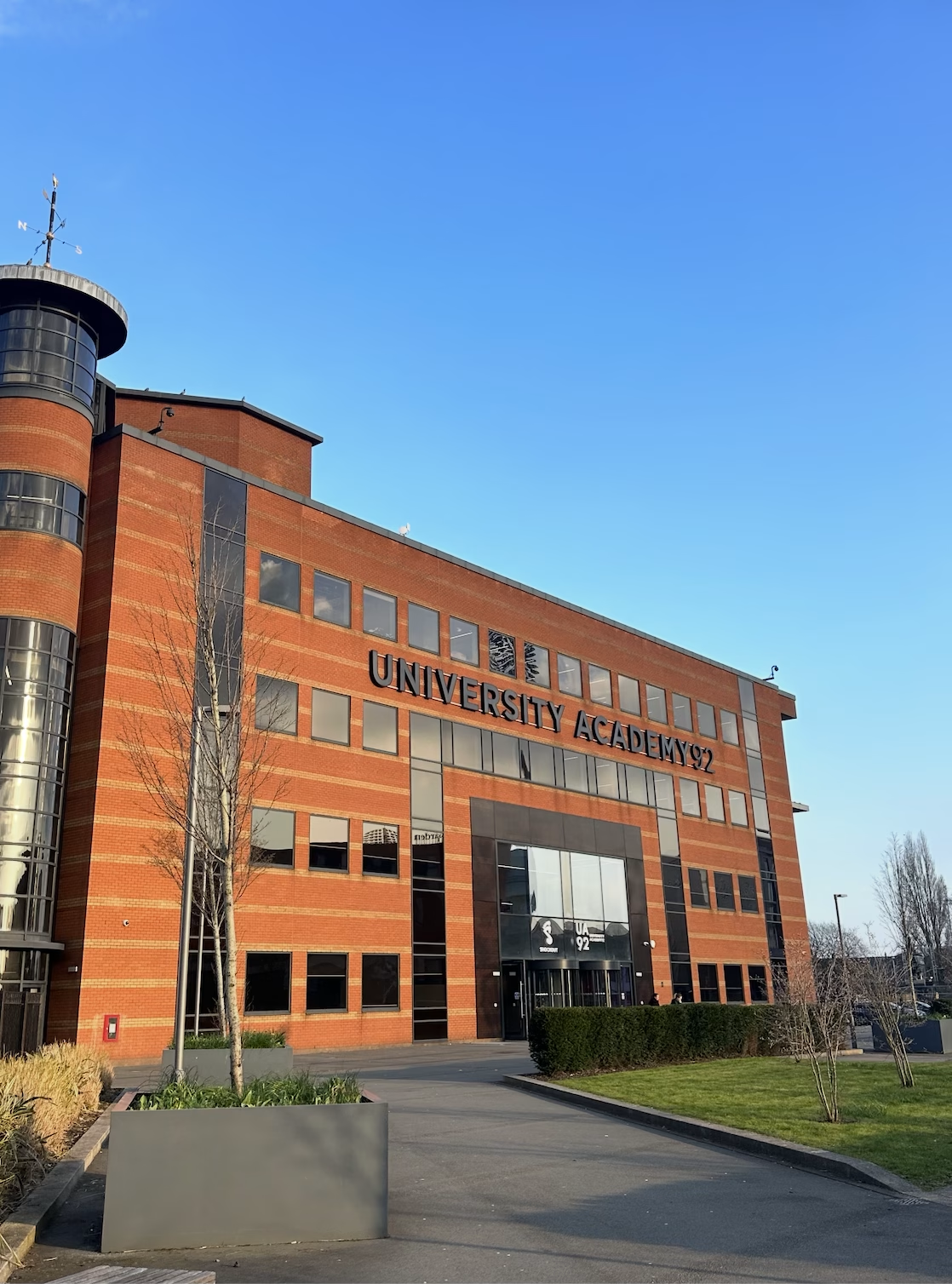
UA92’s campus is based in Old Trafford, at the centre of one of the UK’s most football-rich regions. Greater Manchester offers access to a wide range of football environments, from grassroots and community settings to academy, development and performance settings.
At UA92, students are taught by an experienced and well-connected lecturing team with applied knowledge of football, coaching and the wider sport industry. The team use their professional networks and sector experience to help students understand the realities of the football workforce, access meaningful opportunities and make the most of applied real-world experiences while they study.
Studying Sports Coaching at UA92 gives students the chance to connect academic learning with applied practice, developing the knowledge, skills and professional behaviours needed to progress into coaching and related roles across football.


Sports Coaching BSc (Hons)
Develop the coaching, leadership and player development skills to build a career in football coaching. Co-developed with industry and degrees awarded by Lancaster University.
Explore CourseDo you need coaching qualifications to work as a football coach?
Yes. For most paid or regulated coaching roles, you will need recognised coaching qualifications, alongside an enhanced DBS check, safeguarding training and first aid. Requirements vary by role, age group and level, but the qualification pathway starts with Introduction to Coaching Football before progressing through UEFA C, UEFA B, UEFA A and UEFA Pro as responsibilities change. Those working in youth, academy, player-development or specialist coaching environments may also complete additional courses, such as the Advanced Youth Award or UEFA goalkeeper qualifications. For academy and professional club roles, employers commonly expect coaches to hold, or be working towards, higher UEFA qualifications, with UEFA B often acting as an important entry point.
Do you need a degree to become a football coach?
No, a degree is not a legal requirement to become a football coach. However, a Sports Coaching degree can give you a strong advantage by developing the knowledge, applied skills and professional behaviours that complement coaching qualifications. At UA92, students study coaching across community, development, performance and educational settings, helping them connect theory with real coaching practice and prepare for varied roles across football. Students are supported by an experienced and well-connected lecturing team who use their football and sport industry experience to help students access meaningful opportunities and make the most of applied experiences.
How long does it take to become a football coach?
There is no fixed timeframe. Coaches can start gaining experience in grassroots, community or school settings relatively quickly once the right role, supervision, safeguarding, first aid and checks are in place. Entry-level community roles may focus on participation, inclusion and session delivery, while requirements increase for regulated, youth, academy and professional environments.
Progressing into academy or professional football usually takes longer. Coaches typically build experience while moving through the UEFA pathway, with UEFA B often acting as an important entry point for academy or professional club roles.
A degree can strengthen this progression by developing the applied coaching, player development, analysis and professional skills that sit alongside coaching qualifications. At UA92, students can study Sports Coaching through a traditional three-year route or a two-year accelerated degree, helping them build academic knowledge, access lecturer support and develop networks that can open up applied coaching opportunities while they continue progressing through coaching qualifications.
Can you specialise in a specific area of coaching?
Yes. Many coaches specialise in a particular age group (academy, foundation phase, youth development), a position (goalkeeping coaches), a tactical phase (set-piece coaches, transition coaches) or the women’s game. Specialisation often comes after gaining broad coaching experience across multiple environments.
What is University Academy 92 and where is it based?
University Academy 92 (UA92) is a higher education institution based in Old Trafford, Manchester, co-founded by members of Manchester United’s Class of 92 and Lancaster University. UA92 offers degrees specifically designed around careers in the football and sport industry, including the Sports Coaching BSc (Hons). Degrees are awarded by Lancaster University.