 World of Business
  World of Digital
  World of Media
  World of Sport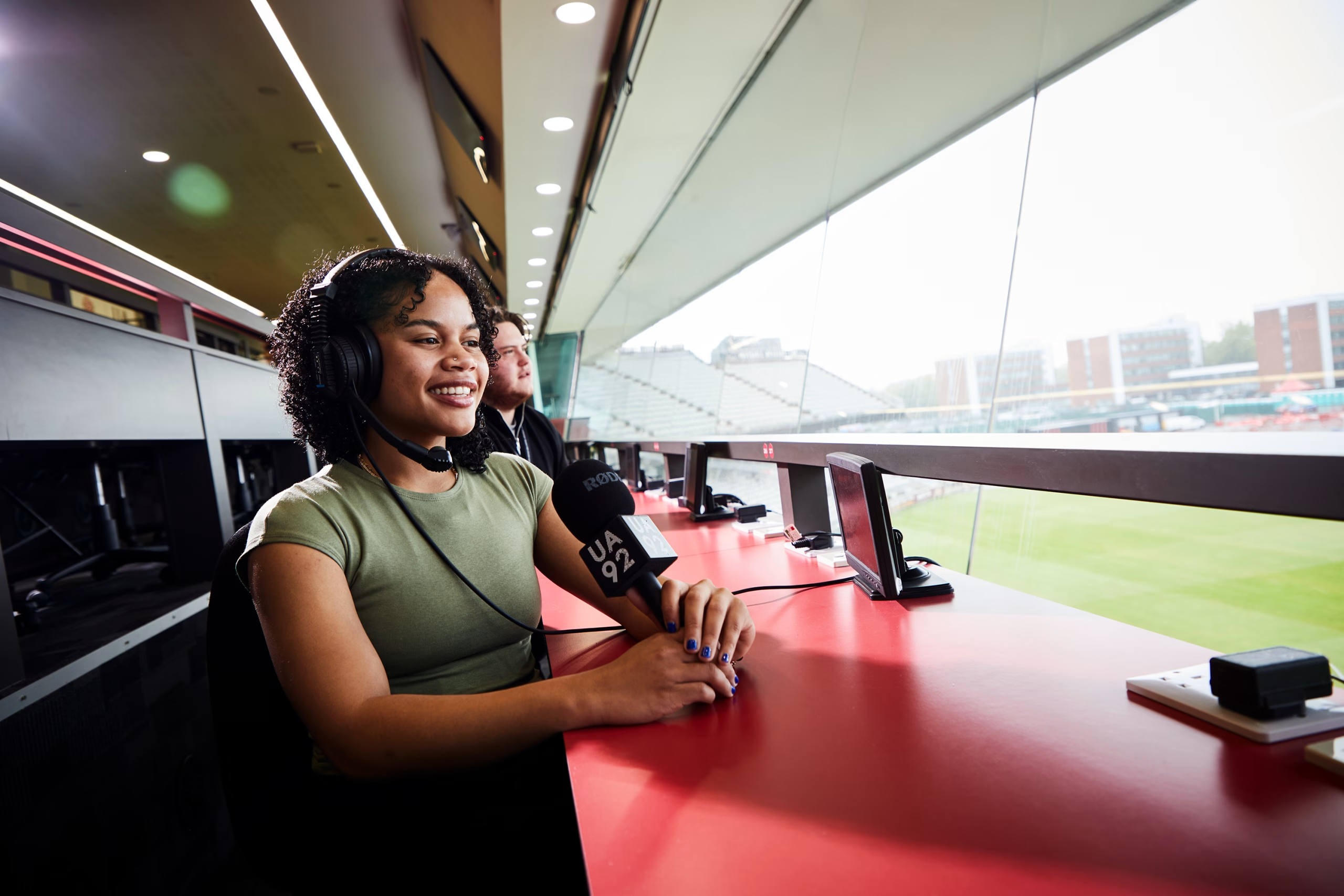
What does a sports broadcaster do?
A sports broadcaster is the voice that brings sport to life across different channels.
Whether that’s through live match commentary, post-match analysis, presenting news, social media content or long-form documentaries.
A sports broadcaster brings fans closer to the action. It’s one of sport’s most visible careers. If you want to step in front of the camera, it’s ideal for you.
What is a Sports Broadcaster?
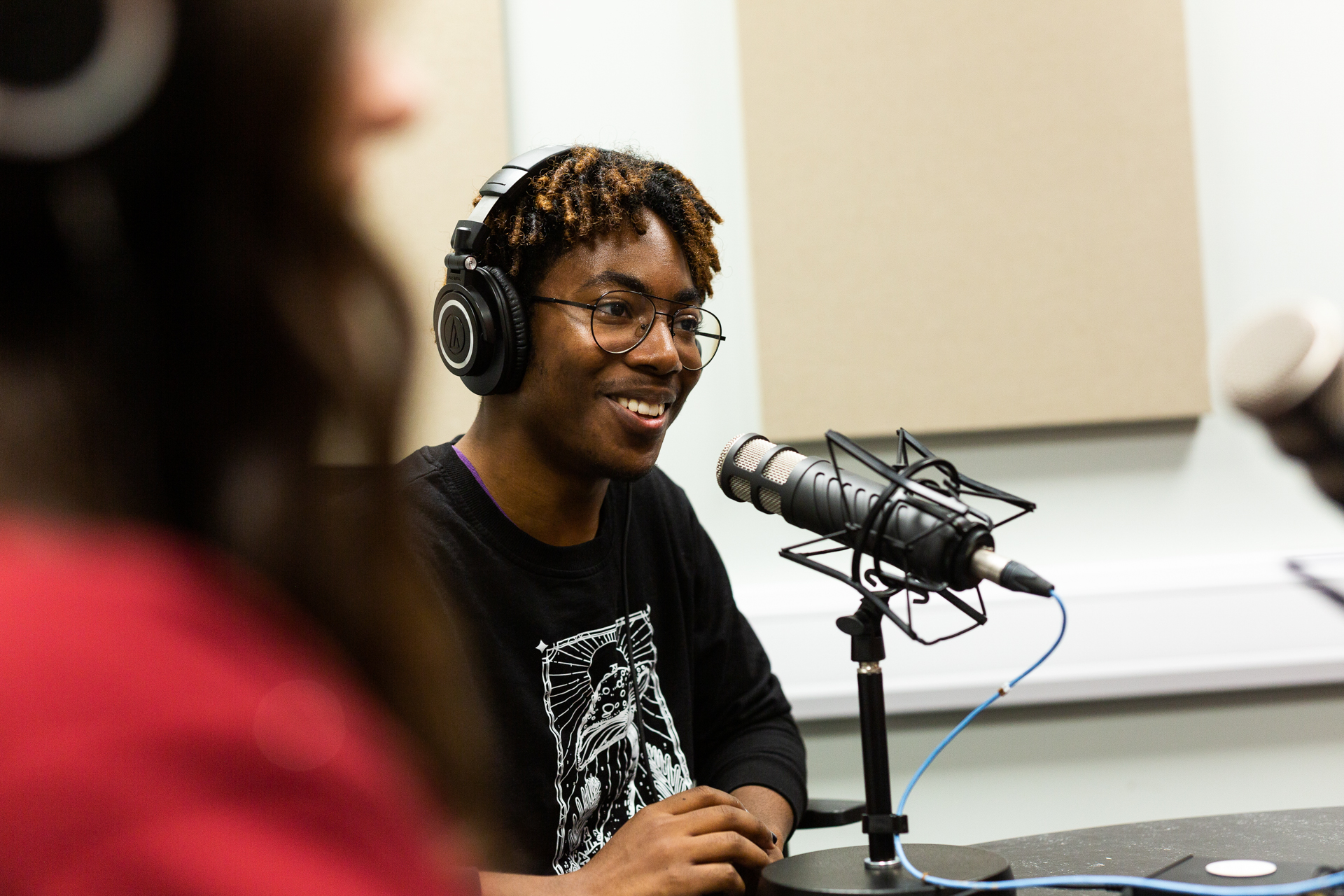
A sports broadcaster communicates sport news, insights and events to audiences across multiple channels including TV, radio, digital platforms and social media. There are many forms of broadcasting, including presenting live match coverage, producing podcasts for club media channels or reporting pitch-side at major tournaments like the World Cup or the Champions League.
Who do Sports Broadcasters work for?
Sports broadcasters often work for major media networks like Sky Sports, TNT Sports, BBC Sport and talkSPORT as well as for streaming platforms like DAZN and Amazon Prime Video. Increasingly, large football clubs, particularly those in the Premier League or Champions League, have their own in-house media operations, which could present opportunities. Digital and social media has changed the face of broadcasting in recent years, giving individuals the platform to self-broadcast their work.
What Does a Sports Broadcaster Do Day-to-Day?
The day-to-day reality of sports broadcasting varies enormously depending on the format, platform or organisation you work for. A typical role might involve:
- delivering commentary, hosting pre- and post-match analysis, and keeping audiences engaged across broadcast windows that can last several hours.
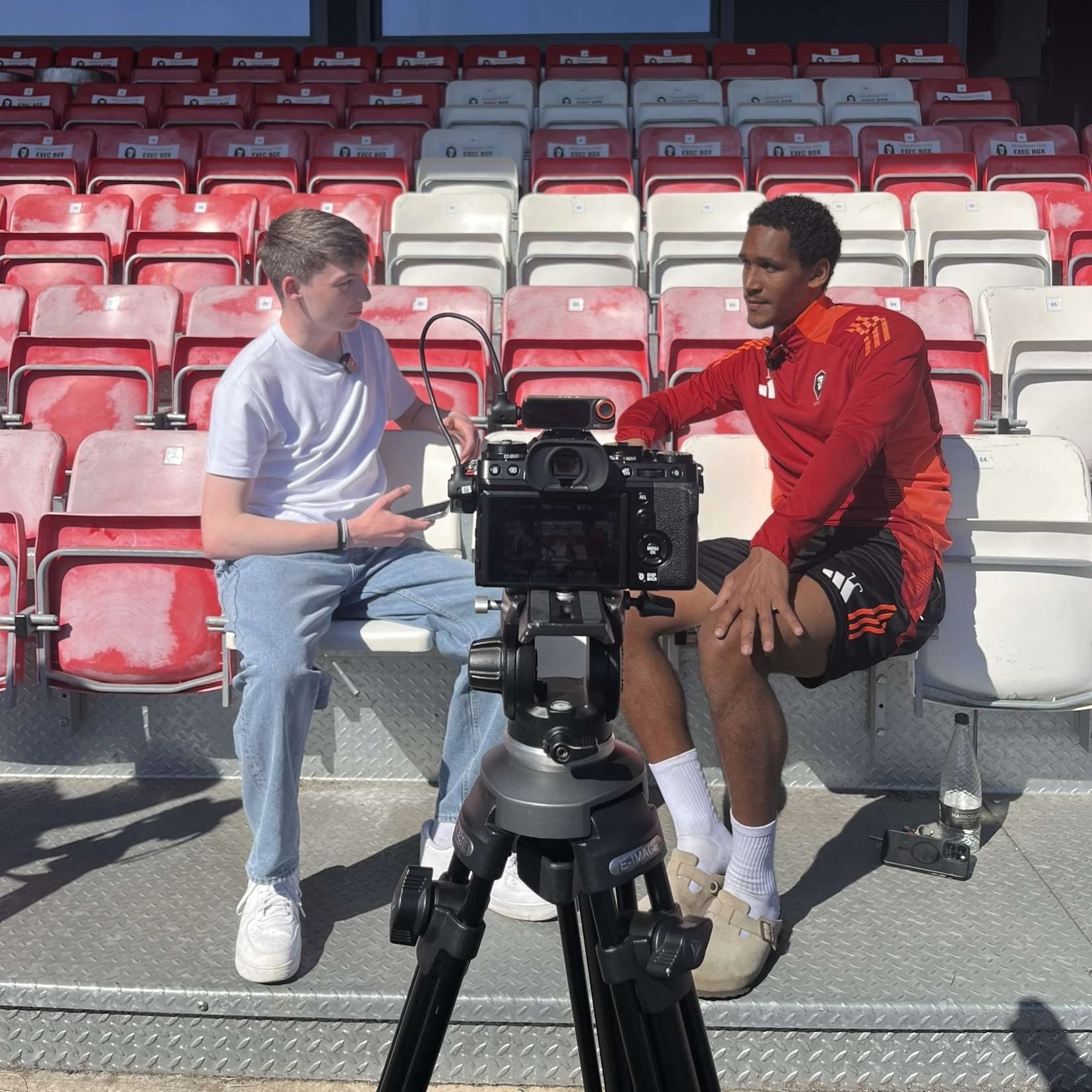
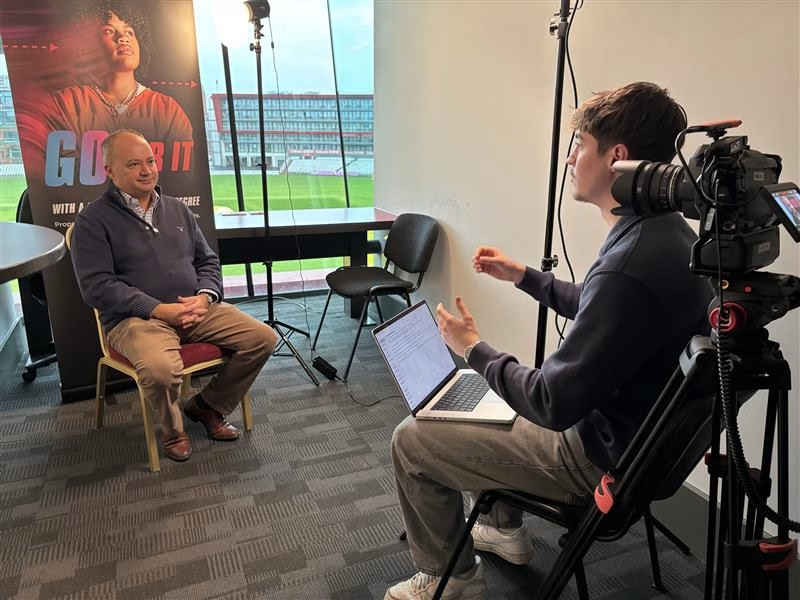
- talking to players, managers, coaches and analysts in press conferences, pitch-side and in studio, often under tight time constraints.
- building detailed knowledge of teams, players, statistics and storylines ahead of broadcasts so commentary is informed and authoritative.
- covering matches, tournaments and breaking news stories from the ground, adapting to fast-moving situations in real time.
- drafting scripts for packages, voiceovers, social clips and digital content, adapting language and tone for different platforms and audiences.
- creating video packages, podcast episodes and short-form social content, often working directly with production software and editing suites.
- developing a recognisable voice and brand across social platforms, engaging with your audiences and growing a following within the sports broadcasting space.
What Skills Does a Sports Broadcaster Need?
- Broadcast presenting and live delivery
- Video and audio editing (Adobe Creative Suite)
- Camera operation and studio production
- Social media content production
- Scripting and autocue reading
- Sports statistics and data interpretation
- Clear, confident communication under pressure
- The ability to identify a story of interest to your audience
- Adaptability when live situations change unexpectedly
- In-depth knowledge of football and sports culture
- Interview technique and when to ask the big questions
- Resilience and the ability to perform consistently in high-pressure environments
What is the career path for a sports broadcaster in the UK?
The career path is rarely linear. Many successful sports broadcasters start in local radio or club media and work up through regional TV, digital platforms and eventually national broadcast. There range of channels means there are now more routes into sports broadcasting than ever before.

How Do You Become a Sports Broadcaster in the UK?
This is a fast-paced industry that rewards people who are proactive with creating content, putting themselves in front of a camera or microphone and building a body of work before they graduate. It’s important to start practicing while you are studying, build your portfolio and make the most of every opportunity that comes your way.
A degree in sports journalism, media or broadcast will give you the technical foundation as well as the industry knowledge and contacts to launch your broadcasting career. The BA (Hons) Football Broadcast and Journalism degree at UA92 is specifically designed to prepare you for this career path. It will develop your presenting skills, editing software, production workflow, interview technique, writing skills and much more.
Where Should I Study to be a Sports Broadcaster?
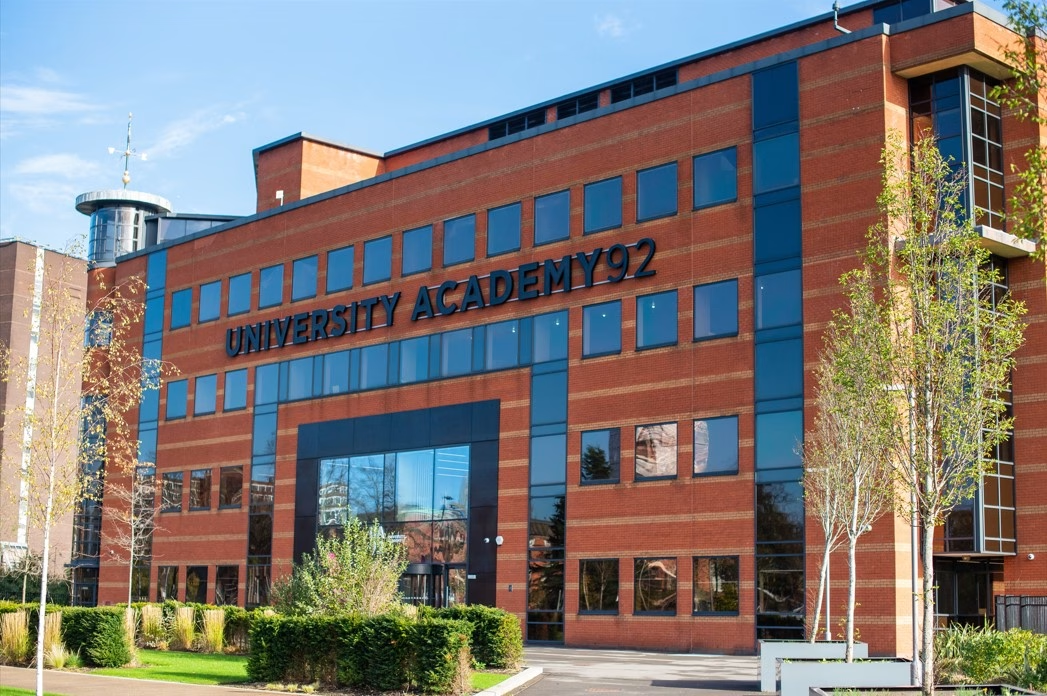
UA92’s campus is at the heart of one of the world’s most media-rich football cities. Manchester is home to Manchester United and Manchester City, with broadcasters including BBC Sport, ITV and multiple independent production companies all operating within the city. Our industry partners and connections, with clubs such as Salford City FC, give students genuine opportunities in reporting, commentating and content production for real audiences.


Football Broadcast and Journalism BA (Hons)
Develop the skills to present, produce and report across broadcast, digital and social media — and launch a career in one of football’s most visible industries. Awarded by Lancaster University.
Explore CourseDo you need a degree to become a sports broadcaster?
Most sports broadcasters working at major UK networks have a relevant qualification. A degree in sports journalism, broadcast journalism or media gives you the technical skills, industry experience and professional networks that are very difficult to build without formal training. It also demonstrates to employers that you’re serious about your craft.
How long does it take to become a sports broadcaster?
The fastest you can complete a degree at UA92 is in two years, if you opt for one of our accelerated courses. The other option is to follow the traditional route and complete your degree in three years. Our courses emulate the practical, hands-on nature of a sports broadcaster and therefore our students are not assessed by exams.
What is the difference between a sports presenter and a sports reporter?
A sports presenter typically anchors studio programmes, leads panel discussions and hosts live coverage in a studio environment. A sports reporter works in the field at matches, press conferences and training grounds, breaking stories and contributing live updates. In practice, the skills overlap significantly and many early-career broadcasters build experience across both presenting and reporting.
Which broadcasters hire sports journalists and presenters in the UK?
The main employers of sports broadcasters in the UK are Sky Sports, BBC Sport, TNT Sports, talkSPORT, ITV Sport, DAZN, Amazon Prime Video and Channel 4 Sport. Beyond traditional broadcasters, Premier League and Championship clubs employ in-house media teams, with lower league clubs increasingly employing media support. There are also a growing range of digital platforms and sports podcasts present further opportunities to work in the field.
What is University Academy 92 and where is it based?
University Academy 92 (UA92) is a higher education institution based in Old Trafford, Manchester, co-founded by members of Manchester United’s Class of 92 and Lancaster University. UA92 offers a range of degrees specifically designed around careers in the football and sport industry, including the Football Broadcast and Journalism BA (Hons). Degrees are awarded by Lancaster University.