 World of Business
  World of Digital
  World of Media
  World of Sport
What does a sports journalist do?
Sports journalists tell the stories, start the conversations and draw attention to important issues in and around sport. Whether it’s breaking news about a transfer rumour, press conference coverage, full match analysis or an in depth interview with an athlete, sports journalism is a varied and exciting role. Here’s what the job really involves and how you get there.
What is a Sports Journalist?
A sports journalist researches, writes, produces and publishes content about sport across multiple platforms including newspapers, magazines, websites, podcasts, social media and video. The role covers everything from breaking transfer news and match reports to in-depth features, investigative pieces and data-driven analysis. You can choose to specialise in one particular sport such as football, or cover a range of different sports.
Who do Sports Journalists work for?
Sports journalists work for national newspapers including The Guardian, The Times, The Athletic and FourFourTwo, as well as broadcasters like BBC Sport, Sky Sports and talkSPORT. Sports journalists often work alongside the presenting teams.
A growing number of digital platforms like Sportbible, Team Talk and Football 365 attract millions of users per year with sport specific news. While Premier League and Championship clubs now employ in-house editorial teams producing journalism-style content directly for fans.

What Does a Sports Journalist Do Day-to-Day?
The day-to-day work of a sports journalist is shaped by the news cycle, the fixture list and the format you work in. A typical role might involve:
- Match reporting – attending and writing live match reports often from the press box
- Breaking news – monitoring sources to identify and report on transfers, managerial changes, injuries and disciplinary matters
- Press conferences and interviews – attending manager and player press conferences and conducting one-to-one interviews for features and profiles
- Feature and long-form writing – researching and writing in-depth pieces on players, clubs, tactics, history and the business of football
- Data and statistical analysis – using tools to evidence articles and support editorial judgements with performance data
- Producing digital and social content – writing articles optimised for web, creating social media posts and contributing to video and podcast content
- Building and maintaining contacts — developing relationships with agents, club press officers, managers, players and fellow journalists

What types of Sports Journalism is there?
Sports journalism is a broad field with a range of specialist areas. Understanding the different types helps you work out where your strengths and interests fit.
- Match reporting – the bread and butter of sports journalism. Fast, accurate, opinionated accounts of live sports events
- Feature and long-form journalism – in-depth storytelling that including player profiles, club histories, social and political stories in football, tactical deep-dives
- Investigative journalism – holding organisations accountable by exposing financial irregularities, agent misconduct, discrimination or corruption within the sports industry
- Data journalism – using analysis tools and performance databases to find stories in numbers and statistics
- Podcast and audio journalism – producing interview-led audio content for dedicated sports podcasts, broadcaster podcast feeds and club-produced audio content
- Video and social journalism — creating short-form video journalism for platforms like YouTube, TikTok and Instagram, combining journalistic skills with content creation and video production
What is the career path for a sports journalist in the UK?
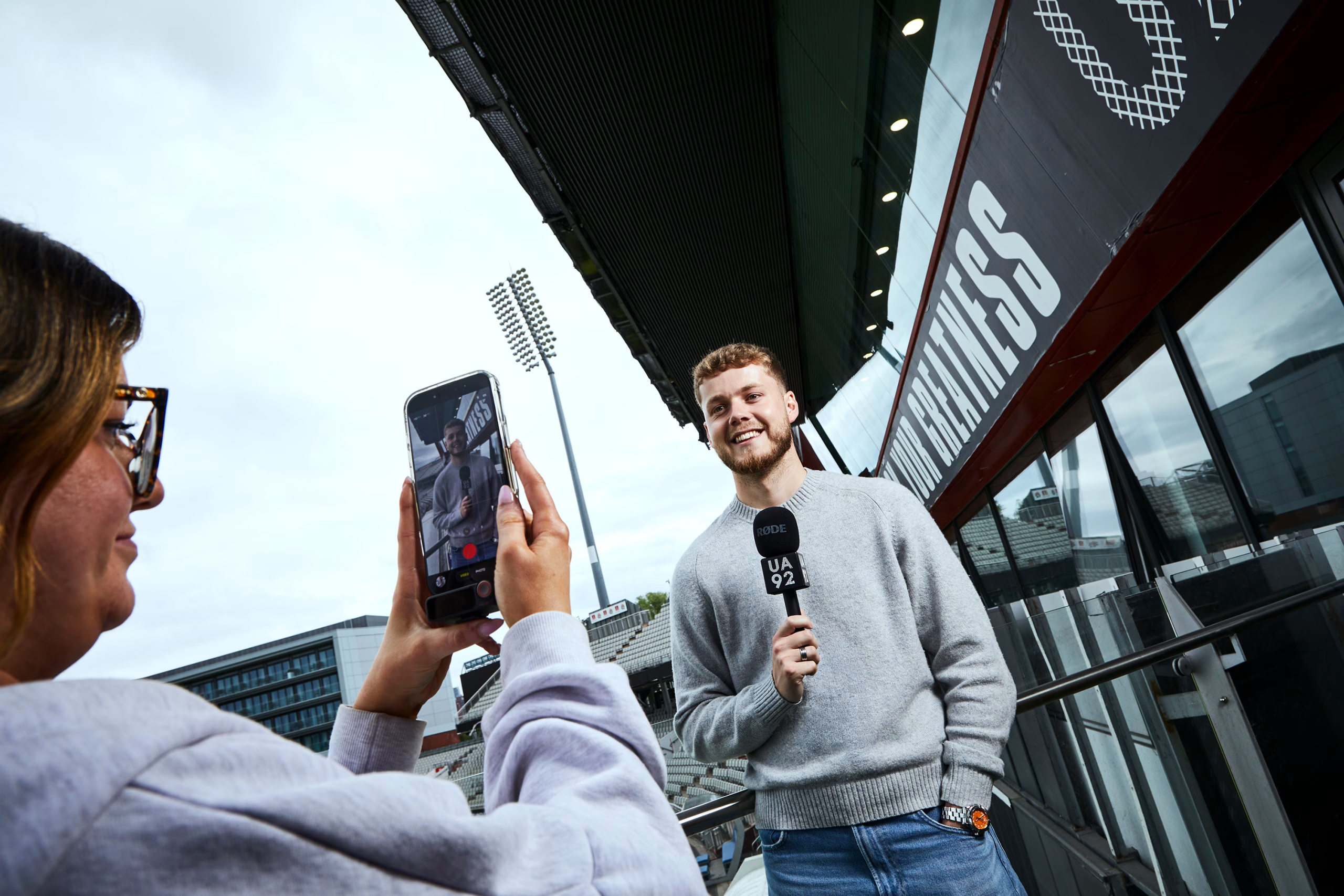
The career of a sports journalist typically starts at an entry-level. Roles such as a junior reporter, digital content writer or editorial assistant in local press or club media are a common place to begin your career path. Progression is usually through regional titles and specialist digital outlets to national publications. You can also get opportunities as a freelance sports journalist, particularly if you have a strong digital presence and following.
What skills does a Sports Journalist need?
Sports journalism is a broad field with a range of specialist areas. Understanding the different types helps you work out where your strengths and interests fit.
- Writing and editing
- SEO and digital content optimisation
- CMS platforms such as WordPress
- Data tools such as Opta
- Video editing and social content production
- Audio recording and podcast production
- Knowledge about the big stories in sport
- Accuracy and attention to detail under time pressure
- Building trust with people who have information
- A genuine interest in the sport, the business and the people behind it
- Resilience to withstand the pressures of a competitive newsroom
- Adaptability across formats, platforms and sports

How Do You Become a Sports Journalist in the UK?
Sports journalism is competitive. However, opportunities are far more accessible than they once were. If you want to break through, you need to start early, build evidence and don’t wait to be invited.
Many sports journalist have a degree in sports journalism or a related discipline. This is usually required if you want to work at a major outlet. A formal qualification gives you the technical foundation you need for news writing, feature writing, interviewing, digital production and data analysis techniques.
The BA (Hons) Sports Journalism degree at UA92 is specifically designed to prepare you for this career path. The two-year route means you can graduate faster and start your career earlier.
Where Should I Study to be a Sports Journalist?
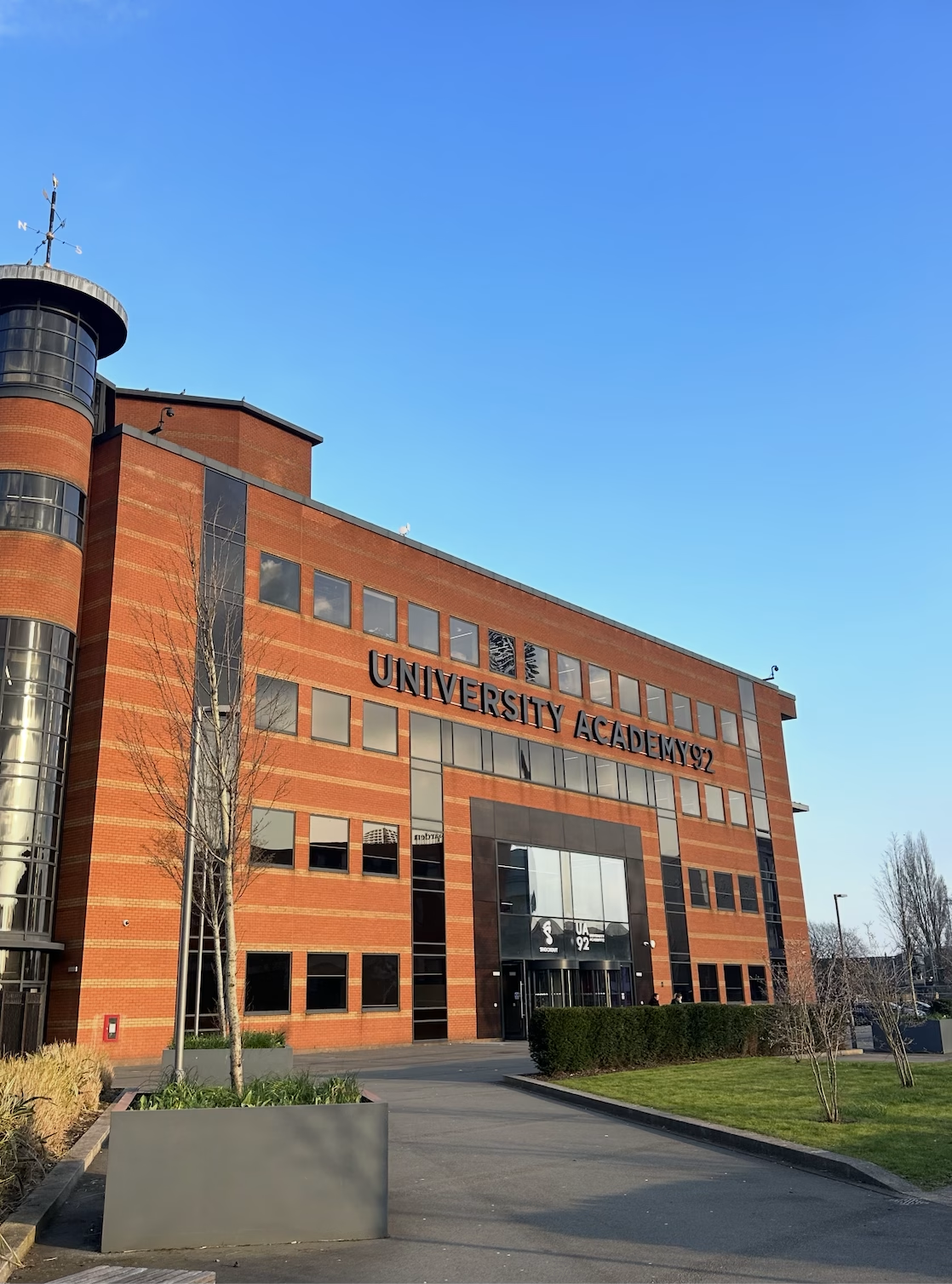
UA92’s campus is at the heart of one of the world’s most media-rich football cities. Manchester is home to Manchester United and Manchester City, with broadcasters including BBC Sport, ITV and multiple independent production companies all operating within the city. Our industry partnerships, with clubs such as Salford City FC gives students genuine opportunities in reporting, commentating and content production for real audiences.


Sports Journalism BA (Hons)
Develop the writing, reporting and digital skills to break into sports journalism — in two years rather than three. Built around real media environments, co-developed with industry, and awarded by Lancaster University.
Explore CourseWhat is the difference between a sports journalist and a sports broadcaster?
Sports journalism and sports broadcasting overlap significantly, and you can work across both. The main difference between a sports journalist and a sports broadcaster is that journalism is built on reporting, writing, investigating, analysing and telling stories about sport in written, audio or video form, whilst broadcasting is focused on presenting, live delivery and on-air performance. If you think you’re more suited to presenting and live broadcast work, take a look at our sports broadcaster career guide.
Do you need a journalism degree to become a sports journalist?
You don’t legally need one, but many sports journalists at major UK outlets have a relevant qualification. A degree in sports journalism gives you the technical skills, the portfolio and the professional network that are very difficult to build without formal training. It also demonstrates that you’re serious about your craft. UA92’s Sports Journalism Accelerated BA (Hons) gets you there in two years rather than three.
Is sports journalism a competitive career?
Yes sports journalism is highly competitive, particularly at a national level. But, the expansion of digital media, in-house club content teams and specialist platforms like The Athletic has significantly increased the number of roles available. If you want to break through as a sports journalist you need a strong portfolio, specific specialist knowledge, good networks and the persistence to keep pitching and publishing.
Can I specialise in football journalism specifically?
Absolutely and many sports journalists specialise in a particular sport. Football is the UK’s most-covered sport by a long way, and demand for football content across print, digital, broadcast and social is huge. Developing your skills in specific areas within football like tactics, data, transfers or women’s football is a good and increasingly common career path. UA92’s football-focused degrees are specifically designed to support this.
What is University Academy 92 and where is it based?
University Academy 92 (UA92) is a higher education institution based in Old Trafford, Manchester, co-founded by members of Manchester United’s Class of 92 and Lancaster University. UA92 offers degrees specifically designed around careers in the football and sports industry, including the Sports Journalism and the Football Broadcast and Journalism degrees, which are awarded by Lancaster University.