 World of Business
  World of Digital
  World of Media
  World of Sport
What does a Sports Scientist do?
A sports scientist turns training, recovery and performance into measurable, evidence-based progress. From data on the training ground to recovery protocols, injury prevention and physical preparation, sports scientists make sure players are operating at peak performance levels. It’s one of football’s most technical careers, and it sits right at the heart of every professional squad.
What is a Sports Scientist?
A sports scientist applies the principles of physiology, biomechanics, psychology and data analysis to improve athletic performance. In football, you sit between the medical team, the coaching staff, taking data to develop training loads, monitor recovery, reduce injury risk, and inform tactical decisions.
The role spans physical preparation, performance monitoring, recovery, and applied research. Some sports scientists choose to specialise in one area, while others work as generalists across the full team. At top-tier clubs the department can include strength and conditioning coaches, performance analysts, rehabilitation specialists and applied scientists working side by side.
Who do Sports Scientists work for?
Premier League and EFL clubs employ sports science teams. This can range from one or two staff at smaller clubs to full departments with ten or more specialists at the top level. National governing bodies including the FA, England’s senior and youth setups, and UK Sport employ sports scientists across multiple sports. Beyond football, you’ll find sports scientists in rugby, Olympic sports (UK Sport, the English Institute of Sport), athletics, cricket and motorsport. Independent performance facilities like the Manchester Institute of Health & Performance also employ sports science practitioners who work with athletes across multiple clubs.
If you’re more interested in the coaching side of performance, take a look at our football coach career guide. If nutrition is where your focus lies, our sports nutritionist guide covers that in detail.
What Does a Sports Scientist Do Day-to-Day?
The day-to-day work depends on the level you operate at and the specialism you focus on. A typical role might involve:
- Designing physical preparation programmes – building strength, conditioning and energy-system plans tailored to individual players.
- Monitoring training and match load – using technology to track player load, flagging fatigue and injury risk.
- Performance testing – running lab and field tests including VO2 max, lactate threshold, jump testing and sprint profiling to benchmark fitness and track progress.
- Managing recovery – coordinating with medical, physiotherapy and nutrition staff on recovery protocols and return-to-play following injury.
- Analysing performance data – using analysis tools to turn raw data into actionable insight for coaches and players.
- Working alongside the medical team – bridging medical and performance perspectives during injury rehabilitation and return-to-play.
- Contributing to tactical and squad decisions – feeding physical and conditioning data into wider analysis to inform match preparation, squad rotation and substitution timing.

What Types of Sports Science Work Are There?
Sports science covers several distinct specialisms. Here’s where practitioners typically focus:
- Strength and conditioning – designing and delivering physical preparation programmes for individuals and teams. Often a specialist S&C coach role within the wider performance department.
- Performance monitoring and analysis – managing GPS, wearable and load-monitoring data across the squad. Sits closest to data analytics.
- Rehabilitation and return-to-play – working with injured players from initial recovery through to full match-fitness, in partnership with the medical team.
- Youth and academy development – applying sports science to academy and developing players with a focus on long-term athletic development.
- Applied research – working at the intersection of clubs and academic institutions and designing studies that inform real-world performance practices.
What is the career path for a Sports Scientist?
Your career path as a sports scientist typically starts in an entry-level role such as junior sports scientist, academy sports scientist or assistant strength and conditioning coach at a club, governing body or applied performance institute. With experience and professional accreditation through CASES (the Chartered Association of Sport and Exercise Sciences) or UKSCA (UK Strength and Conditioning Association), you could progress into senior practitioner and specialist roles at Championship and Premier League clubs, before moving into leadership positions such as Head of Sports Science, Head of Performance or Director of Performance.
The career path isn’t always linear. Many practitioners combine club work with academic posts, applied research or consultancy. A postgraduate qualification (MSc, PhD) is common, particularly if you want to move into specialist research or senior performance roles.

What Skills Does a Sports Scientist Need?
- Performance data platforms
- Lab and field testing (VO2 max, lactate threshold, force plates)
- Statistical analysis and data visualisation (Excel, Power BI)
- Strength and conditioning programming
- Working knowledge of biomechanics, physiology and exercise science
- Clear communication of complex data to coaches, players and medical staff
- Collaboration across multidisciplinary teams
- Scientific rigour and attention to detail
- Curiosity and a research mindset
- Adaptability to the demands of the season, the fixture list and the individual player

How Do You Become a Sports Scientist in the UK?
Most professional sports scientists hold a degree in sports and exercise science or a closely related discipline. The degree gives you the scientific foundation across the core disciplines of sports science; physiology, biomechanics, and psychology as well as an understanding of how those areas combine in applied performance work.
Practical experience is essential. Football clubs, academies and university sport programmes offer placements, internships and volunteer opportunities that let you apply your learning in real performance environments. CASES (the Chartered Association of Sport and Exercise Sciences) accreditation is the recognised professional standard in the UK, and a CASES endorsed undergraduate degree gives you the first step into the profession.
The BSc (Hons) Sports and Exercise Science course at UA92 is designed for this kind of career. You study the science of performance, recovery and rehabilitation, with opportunities to experience working in real football and sport environments through partnerships with clubs across Greater Manchester.
Where can you study Sports Science?
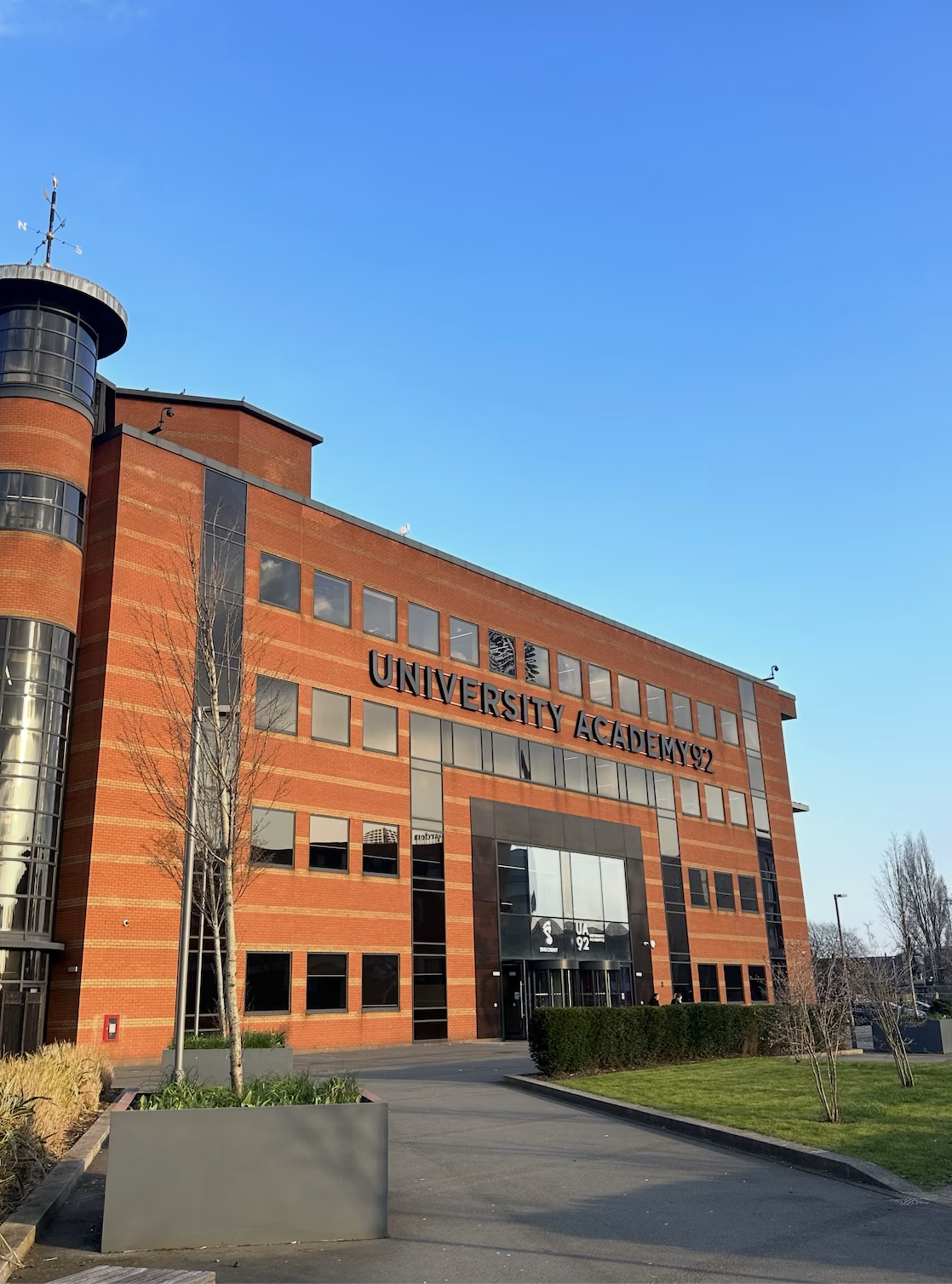
UA92’s campus is in Old Trafford, at the centre of one of the most football-dense regions in the country. Greater Manchester is home to seven professional clubs across the EFL pyramid, plus the Manchester Institute of Health & Performance and a network of academy and elite-level partners. Through industry partnerships including Salford City FC, you have access to opportunities in professional performance environments while you study.


Sports and Exercise Science BSc (Hons)
Develop the scientific, technical and applied performance skills to build a career in football and elite sport. Co-developed with industry and degrees awarded by Lancaster University.
Explore CourseDo you need a degree to become a sports scientist?
Yes. Sports science is a specialist, technically demanding role and the major employers require a relevant undergraduate degree as a minimum. Completing a CASES endorsed degree supports the process of becoming a CASES accredited practitioner.
What is the difference between a sports scientist and a strength and conditioning coach?
Strength and conditioning is one specialism within sports science. An S&C coach focuses on designing and delivering physical preparation programmes, building strength, power, speed and conditioning abilities in athletes. A sports scientist’s remit is broader, covering load monitoring, recovery, performance testing, data analysis and applied research as well as physical preparation. Many practitioners work across both, particularly earlier in their career.
How long does it take to become a sports scientist?
Most sports scientists complete three years of undergraduate study before moving into entry-level applied roles. At UA92, you can complete your undergraduate study in just 2 years if you choose the accelerated course. You may choose to specialise further by continuing your studies to postgraduate level with a master’s degree (MSc) or PhD. At UA92 the course is built around applied skills rather than purely theoretical study, so you build practical experience alongside your degree.
Which clubs and organisations employ sports scientists in the UK?
Every Premier League and Championship club employs a sports science and performance team. EFL clubs in Leagues One and Two increasingly do too, particularly within their academy structures. Beyond football, sports scientists work for the FA, the RFU, UK Sport, the English Institute of Sport, British Olympic sports governing bodies, and at independent performance institutes including the Manchester Institute of Health & Performance.
What is University Academy 92 and where is it based?
University Academy 92 (UA92) is a higher education institution based in Old Trafford, Manchester, co-founded by members of Manchester United’s Class of 92 and Lancaster University. UA92 offers degrees specifically designed around careers in the football and sport industry, including the Sports and Exercise Science BSc (Hons). Degrees are awarded by Lancaster University.