 World of Business
 World of Digital
 World of Media
 World of Sport
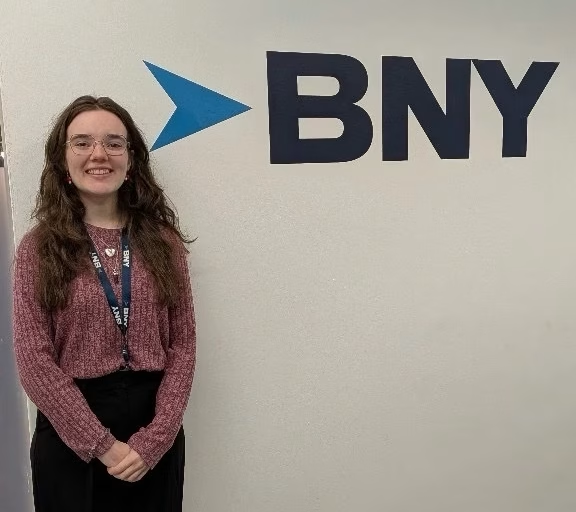
Hi, I’m Abigail and I am an Engineering Analyst at BNY (Bank of New York), based in Manchester. I studied Computer Science at UA92, graduating in 2025.
What led you to pursue a career in tech?
I’ve always loved technology and enjoyed computer science at school, so pursuing it at A-level and then at degree level was an easy choice. Following that path led me straight into software engineering. I was also drawn to the industry because there are so many opportunities, as technology is such a big part of everyday life.
How did studying Computer Science at UA92 prepare you for your role?
Studying computer science has been directly relevant to what I do now, as it gave me the core skills and foundations I use every day. My time as a student rep was also valuable – it taught me how to communicate with lots of different people, from fellow students to academics and even the university board. Learning how to adapt my communication style to different situations and stakeholders is helping me a lot in the workplace.
What does your day to day look like?
In my role at BNY, I’m currently working on an AI project that aims to make the company’s client onboarding process quicker for clients and more efficient for staff. Day to day, I meet with my team to make sure we’re all on the same page and to support each other, and I spend the rest of my time working on my own bugs, features, and code. Alongside the technical side of the job, I also get to take part in things happening around the company and the local community, like guest talks, seasonal events, and volunteering, which adds some welcome variety to my routine. I’ve also taken part in company inclusivity events and early-careers initiatives, which has helped me grow my confidence and get more involved in the company community.
What technologies, tools, or skills do you use in your job?
In my day-to-day work I mainly use Java, Git, and tools like Jira to keep track of what our team is working on. I also work with our in house AI platform Eliza and I spend a lot of time debugging, testing, and problem solving.
Have you contributed to any initiatives such as mentoring, outreach, or women-in-tech groups?
As soon as I joined BNY, I signed up to all of the company’s EBRG groups, including the women-in-tech network, and I’m always keeping an eye out for any events they’re running.
At university, I was an ambassador for an amazing charity called Rewriting the Code. Since graduating, I’ve stayed involved through their early-careers network and have joined a few of their events. It’s a brilliant resource for students and early-career women in technology.
What advice would you give to prospective students or women entering tech?
I’d say: be stubborn. Even though things have improved a lot in recent years, it can still feel very male-dominated, whether that’s on a computer science course or in the workplace. Don’t let that put you off. If you’re interested in technology, then you belong in technology. You deserve to be in the room, and by making space for yourself, you’re also making it easier for others who come after you.
One thing that’s quite unique about my path is that I’m the first in my family to go university and to go into a technology career. I didn’t grow up coding or taking computers apart – I’ve always been more drawn to the academic and problem-solving side of computer science. Because of that, I’ve naturally leaned into the strengths I do have, especially communication and working with people. Experiences like being a student rep taught me how to share ideas clearly and collaborate with lots of different groups, which has ended up being just as important in my role as the technical side.