 World of Business
  World of Digital
  World of Media
  World of Sport
What does a Sports Nutritionist do?
A sports nutritionist makes sure players are fuelled to perform, recover and compete across the demands of a full season. From individual meal plans and hydration strategies to recovery nutrition and supplementation, they translate the science of nutrition into practical, on-the-ground support for athletes. It’s one of football’s most applied science careers, and one of the fastest growing.
What is a Sports Nutritionist?
A sports nutritionist applies the principles of nutrition science to athletic performance, recovery and long-term health. In football, you work alongside the coaching staff, the medical team and the sports science department to design and deliver nutrition strategies that support training adaptation, match performance and recovery. The role covers individual player support, squad-wide strategy, education and the practical delivery of food through training and match days.
Who do Sports Nutritionist work for?
Premier League and Championship clubs typically have a dedicated performance nutritionist as part of the medical and performance team, often supported by a wider catering and food provision setup. EFL clubs in Leagues One and Two, along with academy structures across the pyramid, increasingly bring nutritionists in on a part-time or consultancy basis.
Beyond football, sports nutritionists work across professional rugby (Premiership Rugby and the RFU), Olympic sport (UK Sport, the English Institute of Sport), cricket, athletics and elite cycling. Organisations like the UK Sport Network and the Manchester Institute of Health & Performance employ nutritionists who work with athletes across multiple sports.
Many sports nutritionists are self-employed or work in private practice. You can build a portfolio of clients across individual athletes, academies, semi-professional teams and brand partnerships.
If the wider science of performance is where your interest sits, take a look at our sports scientist career guide. If you’re more drawn to the coaching side, our football coach guide covers that in detail.
What Does a Sports Nutritionist Do Day-to-Day?
The day-to-day work depends on the level you operate at and the size of the team you support. A typical role might involve:
- Designing individual nutrition plans – building personalised plans around each player’s body composition goals, training load and fixture schedule.
- Delivering match-day and training-day fuelling – managing pre-match meals, in-game fuelling, hydration and post-match recovery nutrition.
- Body composition assessment – tracking body composition data alongside the sports science team to support training and performance goals.
- Educating players and staff – delivering workshops, one-to-one sessions and written materials to build nutritional knowledge across the squad.
- Managing supplementation – advising on safe, evidence-based supplement use, ensuring compliance with anti-doping regulations.
- Working with catering teams – planning training ground menus, travel meals and tournament catering with the club’s catering staff.
- Coordinating across the performance team – working alongside the medical team, sports scientists, strength and conditioning coaches and analysts.

What Types of Sports Nutrition Work Are There?
Sports nutrition covers several distinct specialisms. Here’s where practitioners typically focus:
- Performance nutrition – working directly with athletes and squads to optimise nutrition for training, performance and recovery.
- Academy and youth nutrition – working with developing players, where nutrition supports growth, development and emerging performance demands.
- Body composition – specialist work focused on body composition assessment and management for performance and aesthetic goals.
- Female athlete nutrition – a growing specialism focused on the specific physiological demands of female athletes across the menstrual cycle and across the lifespan.
What is the career path for a Sports Nutritionist?
Your career path as a sports nutritionist typically starts in an entry-level or assistant role at a club, performance institute or sports nutrition consultancy. With experience and professional registration through the Sport and Exercise Nutrition Register (SENr) or the Association for Nutrition (AfN), you progress into senior practitioner and lead nutritionist roles at Championship and Premier League clubs, before moving into Head of Nutrition or Head of Performance Nutrition positions.
The career path isn’t always linear. Many practitioners combine club work with private consultancy, academic posts or contracts with national governing bodies. A postgraduate qualification (such as an MSc in Sport and Exercise Nutrition, accredited by the SENr) is the standard route into accredited professional practice and is typically required for SENr practitioner registration.

What Skills Does a Sports Nutritionist Need?
- Evidence-based knowledge of nutrition science, physiology and biochemistry
- Practical food and meal planning across training, match and travel demands
- Knowledge of food safety and hygiene
- Body composition assessment and interpretation
- Understanding of supplementation and anti-doping regulations
- Behaviour changes and motivational interviewing
- Clear communication of complex nutrition information to players and coaches
- Empathy and the ability to support players through long-term behaviour changes
- Collaboration across the medical, performance and coaching teams
- Scientific rigour and a commitment to evidence-based practice
- Adaptability to the demands of the season, the fixture list and the individual player

How Do You Become a Sports Nutritionist in the UK?
Most sports nutritionists in the UK hold an undergraduate degree in a relevant subject such as sport and exercise science, nutrition, dietetics or human biology. The degree gives you the scientific foundation across physiology, biochemistry, nutrition and research methods, and an understanding of how those areas apply in performance settings.
Postgraduate study is the standard route into accredited practice. An SENr accredited MSc in Sport and Exercise Nutrition can lead to registration with the SENr, which is the recognised professional standard for sports nutritionists working in performance environments in the UK.
The BSc (Hons) Health, Exercise and Sport at UA92 is designed for exactly this kind of career trajectory. You study the science of nutrition, physiology and consider the health and performance of athletes, with applied work opportunities in real football and sport environments through partnerships with clubs across Greater Manchester. The course is structured to give you the foundation you need to progress into an accredited MSc course and registered professional practice.
Where can you study Sports Nutrition?
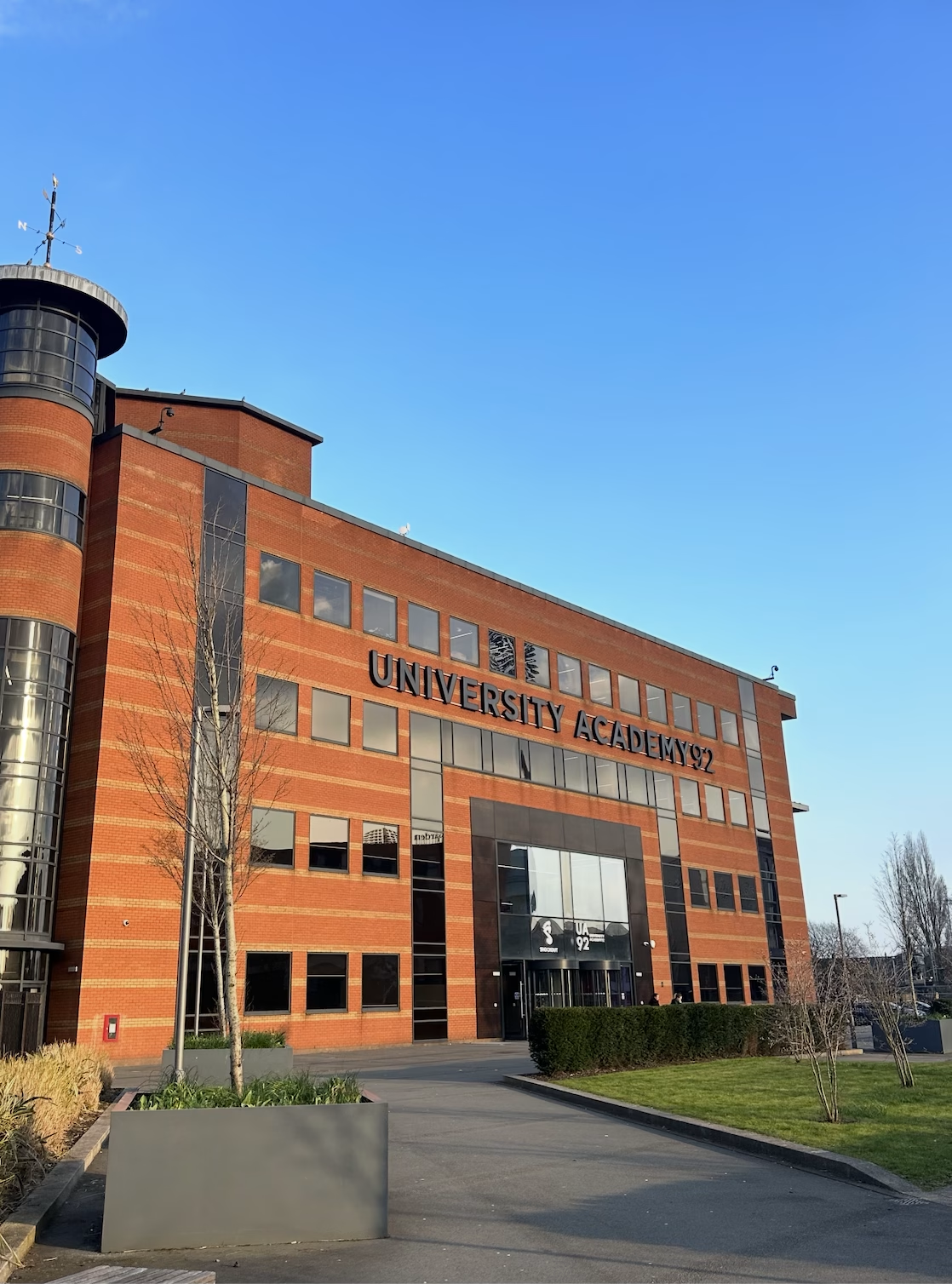
UA92’s campus is in Old Trafford, at the centre of one of the most football-dense regions in the country. Greater Manchester is home to seven professional clubs across the EFL pyramid, plus the Manchester Institute of Health & Performance and a network of academy and elite-level partners. Through industry partnerships including Salford City FC, you have access to opportunities in real performance environments while you study.


Health, Exercise and Sport BSc (Hons)
Develop the scientific, applied and practical skills to build a career in sports nutrition, health and elite performance. Co-developed with industry and degrees awarded by Lancaster University.
Explore CourseDo you need a degree to become a sports nutritionist?
Yes. Sports nutrition is a regulated profession in the UK and the major employers require a relevant undergraduate degree as a minimum, with most senior roles requiring a postgraduate qualification. Registration with the SENr or the AfN, which is the recognised professional standard, requires accredited academic study as the foundation.
What is the difference between a sports nutritionist and a dietitian?
A registered dietitian (RD) is a regulated healthcare professional who can work clinically, including with patients who have medical conditions and complex dietary needs. A sports nutritionist focuses on optimising performance, body composition and recovery in healthy athletic populations. The two roles overlap, particularly in clinical sports nutrition. Many practitioners hold both qualifications.
How long does it take to become a sports nutritionist?
Most sports nutritionists working at professional clubs will have completed an undergraduate degree followed by an MSc in Sport and Exercise Nutrition, then accumulated supervised practice hours for SENr registration. At UA92, you can complete your undergraduate degree in two years if you choose the accelerated course, giving you a head start on postgraduate study and professional registration.
Which clubs and organisations employ sports nutritionists in the UK?
Every Premier League and Championship club has a sports nutritionist working with the first-team squad, either employed in-house or on a consultancy basis. EFL clubs and academies increasingly do too. Beyond football, sports nutritionists work for the RFU, UK Sport, the English Institute of Sport, British Olympic sports governing bodies and elite performance institutes including the Manchester Institute of Health & Performance.
What is University Academy 92 and where is it based?
University Academy 92 (UA92) is a higher education institution based in Old Trafford, Manchester, co-founded by members of Manchester United’s Class of 92 and Lancaster University. UA92 offers degrees specifically designed around careers in the football and sport industry, including the Health, Exercise and Sport BSc (Hons). Degrees are awarded by Lancaster University.