 World of Business
  World of Digital
  World of Media
  World of Sport
What does a Systems Engineer do?
Systems engineers design, build and maintain the technology infrastructure that modern football clubs depend on. From training ground networks and broadcast systems to cloud platforms and matchday IT, systems engineering keeps the club running. It’s one of football’s most technical careers, and increasingly one of the most critical.
What is a Systems Engineer?
A systems engineer designs, implements and maintains the technology infrastructure of an organisation. The role covers networks, servers, cloud platforms, on-site IT systems and the integration of specialist technology including broadcast systems, performance analysis platforms and matchday operations technology. Systems engineering sits across IT, broadcast and football operations.
Some systems engineers work as generalists across the full infrastructure stack. Others specialise in a particular area such as networks, cloud platforms, broadcast technology or DevOps.
Who do Systems Engineers work for?
Football clubs of every size employ system engineering staff or contract them through managed service providers. Premier League and Championship clubs operate full IT and infrastructure teams, often spanning corporate IT, training ground systems, broadcast and matchday technology. EFL clubs operate smaller teams covering multiple disciplines.
National governing bodies including the FA, the Premier League and the EFL employ systems engineers to maintain their own infrastructure and support broadcast and competition operations. Beyond clubs, broadcasters (Sky Sports, TNT Sports, BBC Sport, DAZN, Amazon Prime Video) employ large systems and broadcast engineering teams to support live football coverage. Sports technology companies, stadium operators and broadcast facilities providers all employ systems engineers working across the wider sport industry.
If protecting the systems you’d be building is where your interest lies, take a look at our cyber security career guide. If software development is where your focus sits, our software engineer guide covers that in detail.

What Does a Systems Engineer Do Day-to-Day?
The day-to-day work depends on the specialism you focus on and the size of the organisation you work in. A typical role might involve:
- Designing and maintaining networks – building and operating the wired and wireless networks that support training grounds, stadiums and offices.
- Managing servers and cloud infrastructure – operating the servers and cloud platforms that host club systems.
- Supporting broadcast and matchday technology – working with broadcasters and matchday operations teams to set up and maintain on-site technology.
- Integrating performance and analysis systems – working with the sports science and analysis teams to deploy and maintain performance platforms.
- Resolving technical incidents – responding to outages and technical issues across the club’s infrastructure.
- Planning capacity and upgrades – making sure the technology can scale with the club’s growth and the demands of the competition.
- Working with vendors and partners – managing relationships with technology providers, broadcasters and service partners.

What Skills Does a Systems Engineer Need?
- Foundational knowledge of computer science, networks and operating systems
- Network architecture and protocols
- Server and operating system administration (Windows Server, Linux)
- Cloud platforms (AWS, Microsoft Azure, Google Cloud)
- Scripting and automation (Python, PowerShell, Bash)
- Infrastructure as code tools (Terraform, Ansible)
- Industry certifications (CompTIA Network+, CCNA, AWS and Azure certifications)
- Clear communication of technical issues to non-technical stakeholders
- Methodical problem-solving and incident response
- Collaboration across cyber security, software engineering, broadcast and operations teams
What is the career path for a Systems Engineer?
Your career path as a systems engineer typically starts in an IT support, junior infrastructure engineer or junior systems administrator role. With experience and certifications, you progress into senior systems engineer, platform engineer or DevOps engineer positions, before moving into leadership roles such as Head of Infrastructure, Head of IT or Chief Technology Officer (CTO).
Systems engineering skills are highly transferrable across the sport industry, broadcast, technology, finance and government. Many engineers build a career across multiple sectors.

What Types of Systems Engineering Work Are There?
Software engineering covers several distinct specialisms. Here’s where engineers typically focus:
- Network and infrastructure engineering – designing and operating the networks and servers that run the club.
- Cloud engineering – building and operating cloud-based systems on AWS, Microsoft Azure or Google Cloud.
- Broadcast engineering – specialist work on broadcast systems including outside broadcast, studios and broadcast operations.
- DevOps and platform engineering – building and operating the platforms that software engineers depend on.
- IT support and operations – the front-line support function across club IT systems.

How Do You Become a Systems Engineer in the UK?
A degree in computer science gives you the technical foundation you need. You study programming, networks, operating systems, databases, distributed systems and the wider principles of how modern computing infrastructure is designed and operated. Industry certifications run alongside formal study and continue throughout your career.
The BSc (Hons) Computer Science at UA92 combines technical depth with applied work, giving you the foundation for a career across the sport industry, broadcast, technology and beyond.
Where can you study computer science?
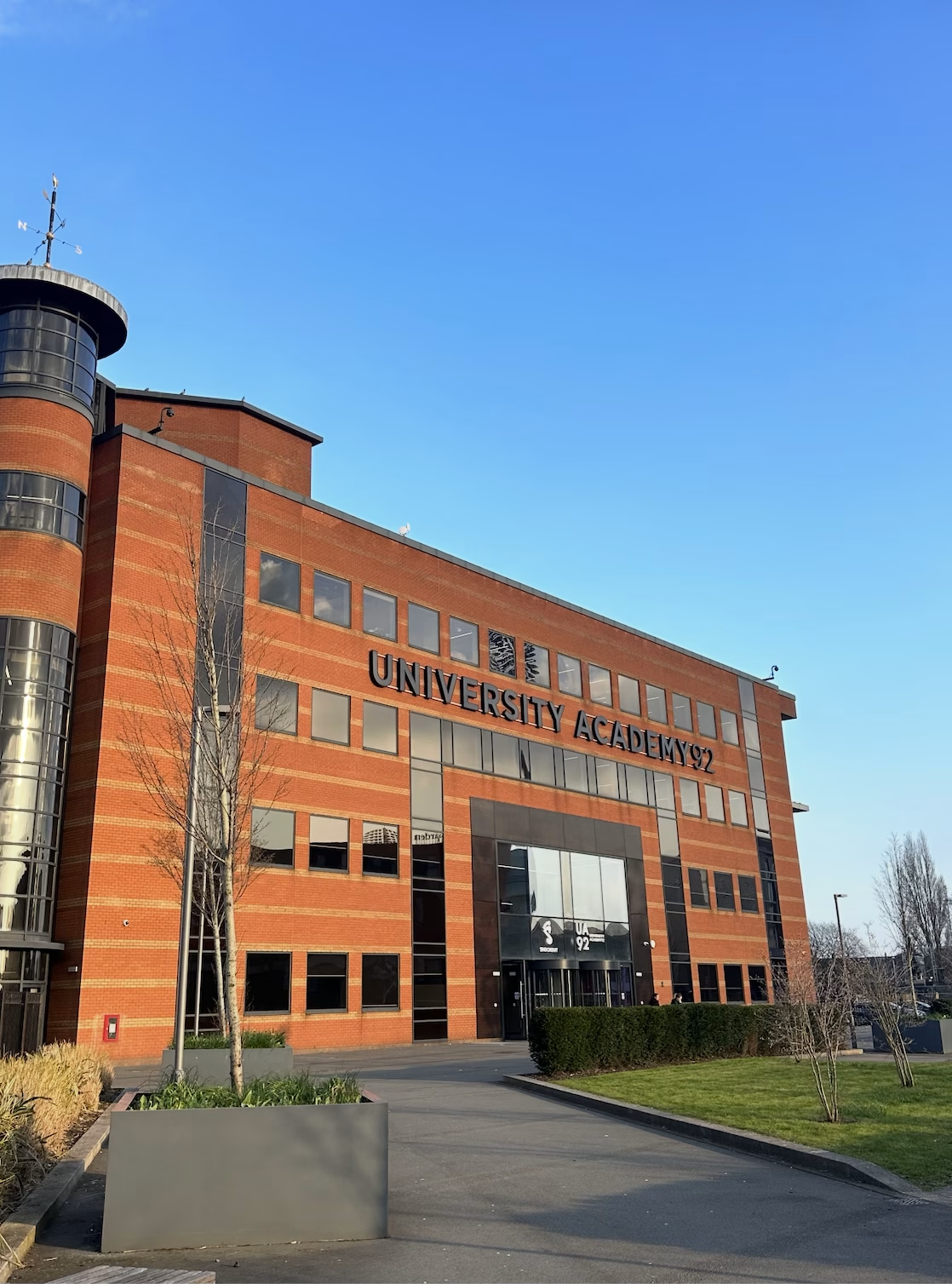
UA92’s campus is in Old Trafford, at the centre of one of the most digitally active regions in the country. Greater Manchester is home to a substantial technology, broadcast and financial services cluster, plus a network of football clubs and sports businesses that all rely on strong systems engineering. Through industry partnerships including Salford City FC, you have access to opportunities in real digital and technology environments while you study.

Computer Science BSc (Hons)
Develop the technical, analytical and applied skills to build a career across systems engineering, software development and the wider technology industry. Co-developed with industry and degrees awarded by Lancaster University.
Explore Course
Cyber Security BSc (Hons)
For students focused on protecting the systems and data that modern organisations depend on.
Explore CourseDo you need a degree to become a systems engineer?
Not legally, but most professional roles require either a relevant degree or equivalent industry experience and certifications. A degree gives you the academic foundation, the network and the credibility that are very difficult to build from outside.
What is the difference between a systems engineer and a software engineer?
Systems engineers design and maintain the technology infrastructure that software runs on, including networks, servers and cloud platforms. Software engineers build the software itself. The two roles work closely together. Take a look at our software engineer career guide for more.
What is the difference between a systems engineer and a cyber security professional?
Systems engineers design and operate the technology infrastructure that organisations depend on. Cyber security professionals protect that infrastructure from attack and compromise. The two functions work closely together and many professionals work across both early in their careers.
Which certifications matter most in systems engineering?
CompTIA Network+ and CCNA are common entry points. AWS, Microsoft Azure and Google Cloud certifications are increasingly important for cloud-focused roles. Specialist broadcast and infrastructure certifications matter in the broadcast engineering space.
What is University Academy 92 and where is it based?
University Academy 92 (UA92) is a higher education institution based in Old Trafford, Manchester, co-founded by members of Manchester United’s Class of 92 and Lancaster University. UA92 offers degrees specifically designed around careers in the football and sport industry, alongside broader degrees including the Computer Science BSc (Hons) and Cyber Security BSc (Hons). Degrees are awarded by Lancaster University.